Est. 2018 · Registered Zimbabwean Contractor
0772 328 052 info@tawaka.co.zw 33 Western Rd, Greendale, Harare
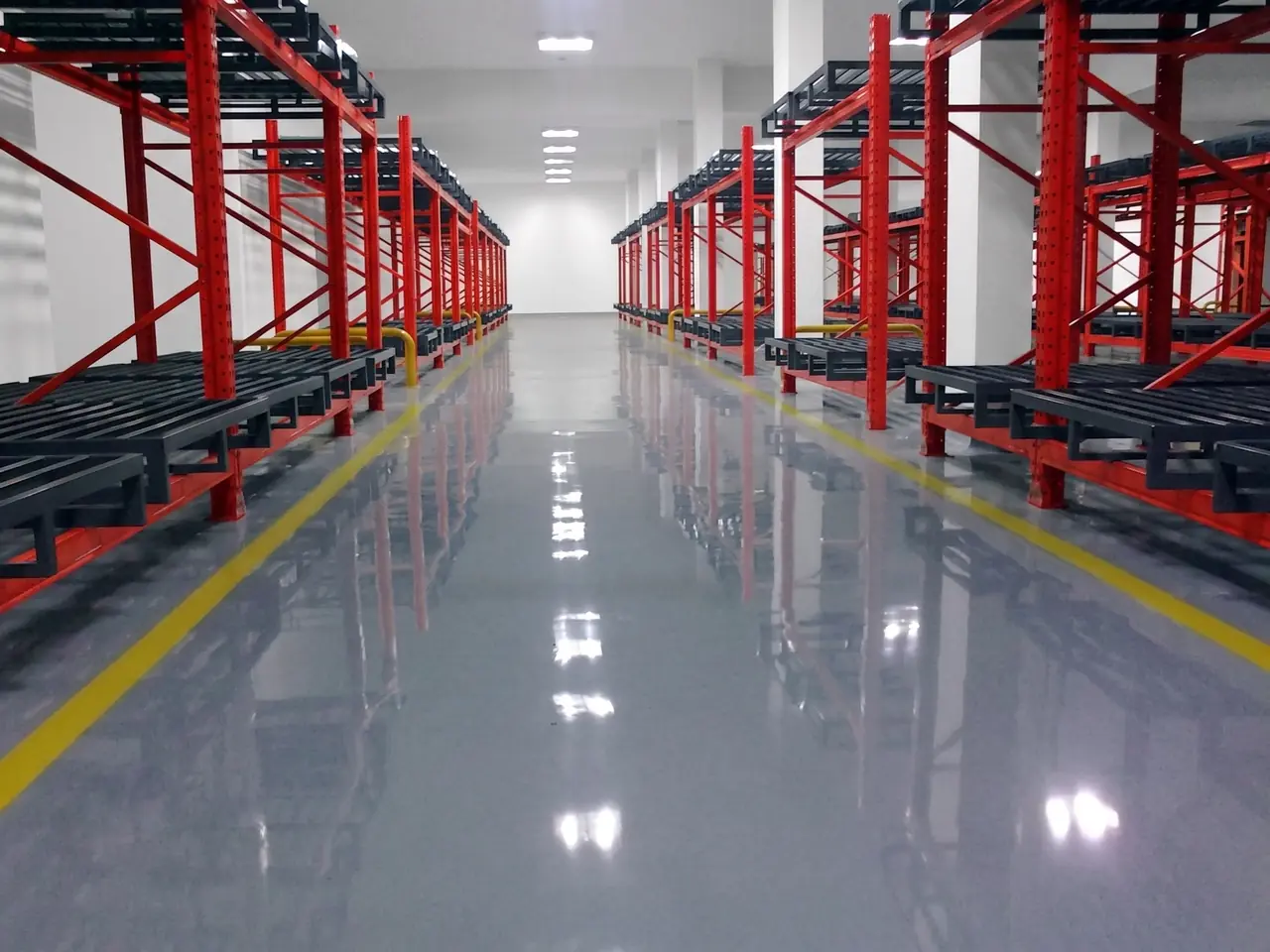
Polyurethane flooring Zimbabwe — heavy-duty seamless resin floor with safety demarcation through a racked distribution facility in Harare

Polyurethane FlooringPU ScreedFood & Heavy Industry

Floors that movewithout cracking.

Polyurethane and PU screed flooring across Zimbabwe for food production, cold stores, commercial kitchens and heavy industrial areas — where thermal shock and impact would destroy a rigid system.

Service overview

Specified where epoxy would fail

Polyurethane flooring is not simply a premium alternative to epoxy. It is a different material solving a different problem, and specifying the wrong one of the two is the most common and most expensive mistake made in industrial flooring.

The distinction is flexibility. Epoxy is hard and rigid, which makes it excellent against abrasion and chemicals in a stable environment. Polyurethane has far greater elongation, so it moves with the slab instead of debonding from it. That single property is why PU screeds are the standard specification in food and beverage production worldwide.

Pour boiling water or run a steam cleaner over a rigid resin bonded to cool concrete and the two materials expand at different rates. The bond fails. A polyurethane screed absorbs that differential, which is why it survives daily wash-down cycles that would lift an epoxy floor within months.

We install polyurethane flooring in Zimbabwe for commercial kitchens, food processing and packing areas, cold stores, breweries, dairies, wash bays and heavy industrial floors. Where a floor faces abrasion but no thermal or impact loading, we will recommend epoxy instead and say why.

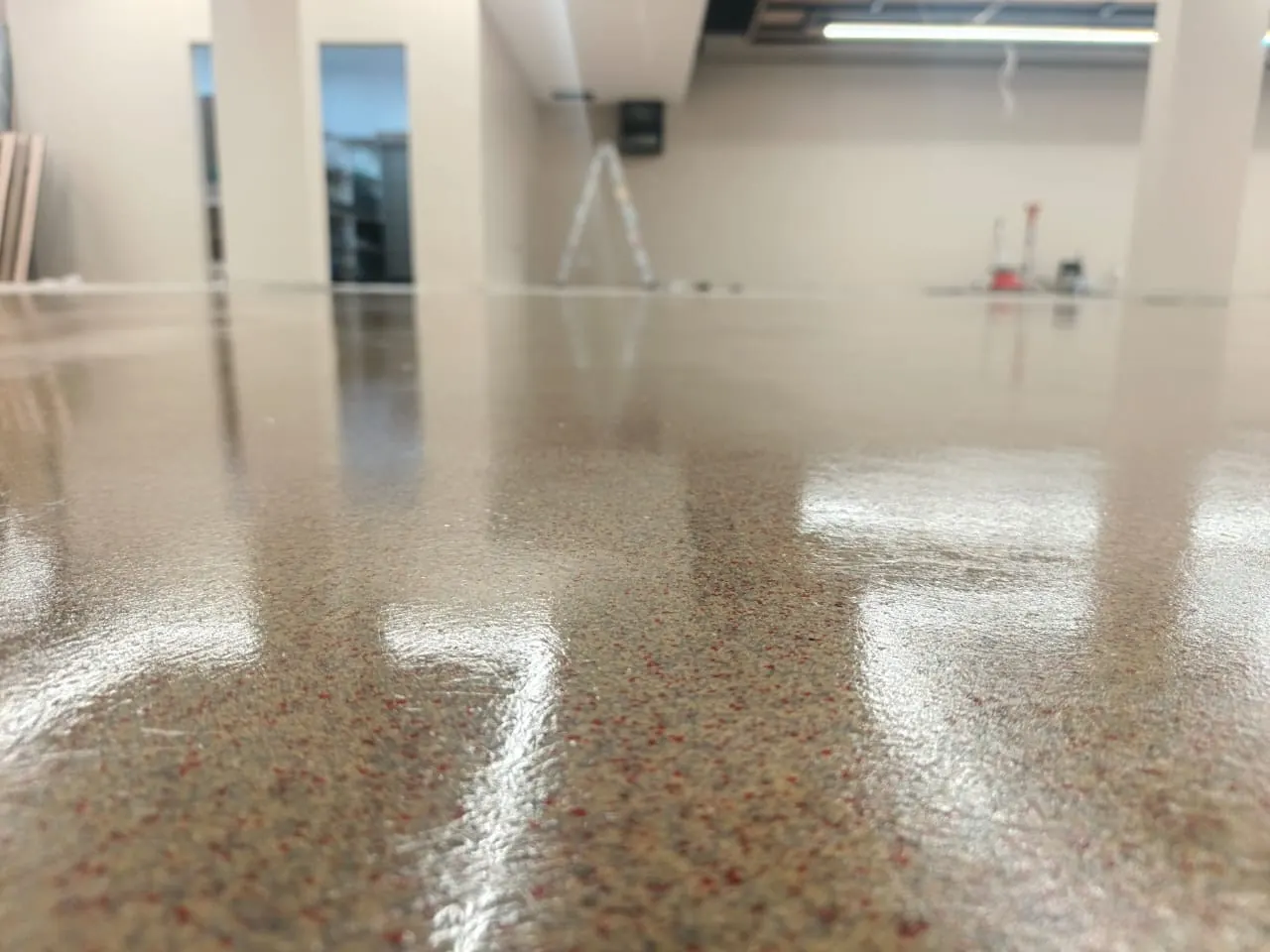
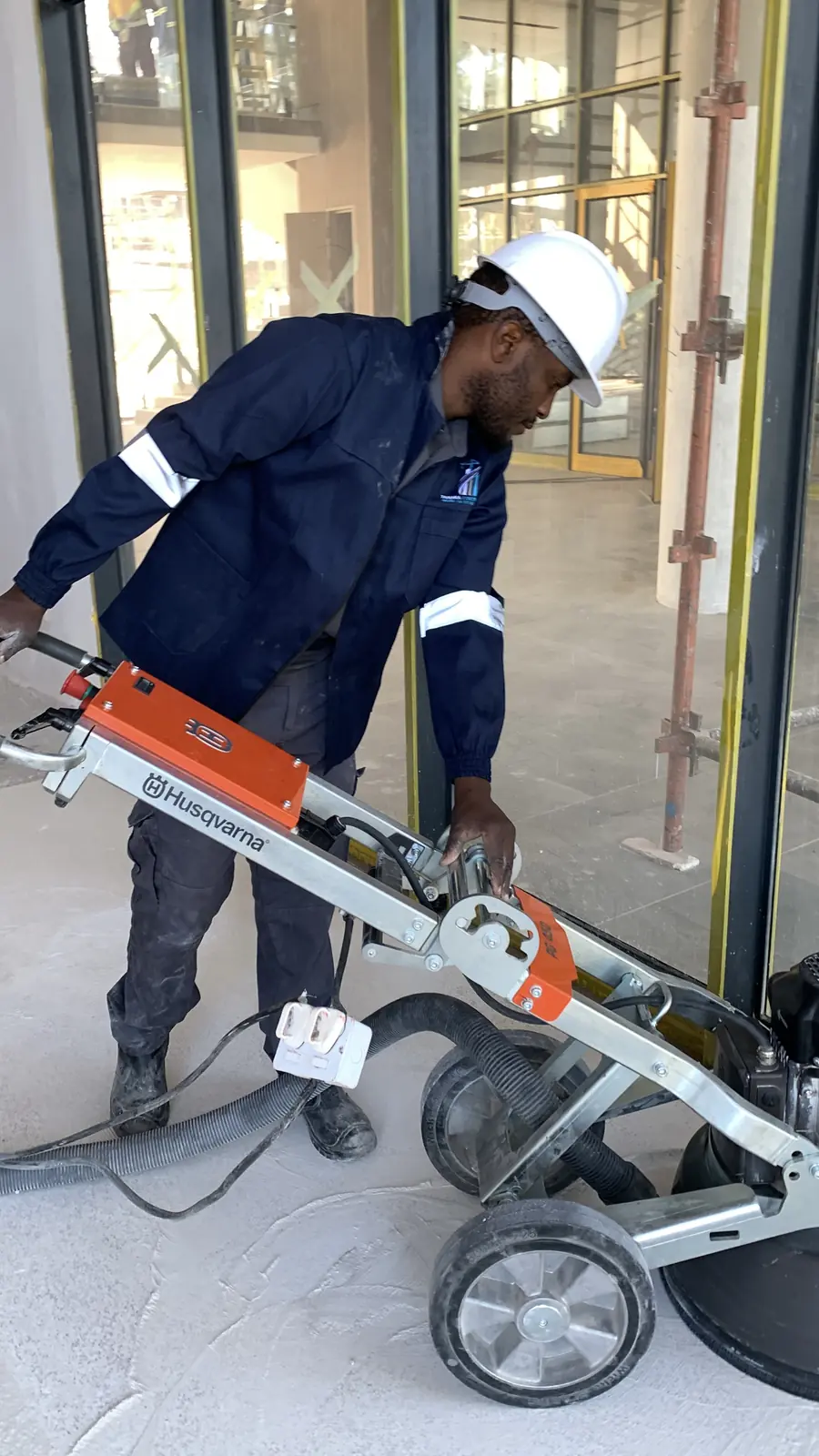
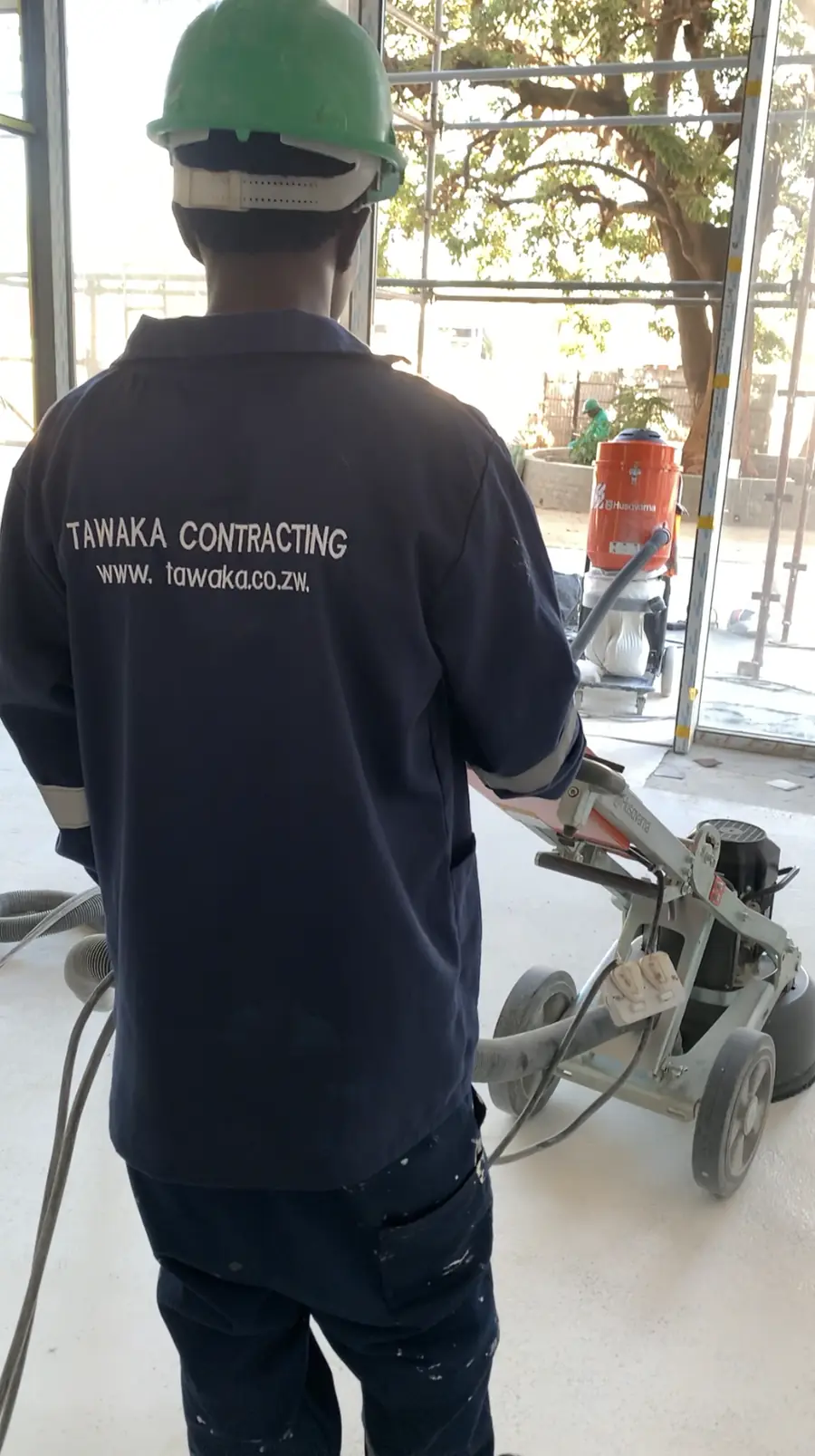
Polyurethane floor preparation Harare — mechanical grinding of a concrete slab with dust extraction before PU screed installation

Why Tawaka

Why we are trusted with process floors

A production floor failure does not just cost the floor. It costs the shutdown needed to replace it. These are the controls that prevent that.

  • System matched to the real environment — we ask about wash-down temperature, chemicals, wheel loads and shift patterns before specifying anything.
  • Falls and drainage designed in — screed laid to fall towards gullies and dressed into drain flanges, so water leaves the floor instead of standing on it.
  • Continuous coved skirtings — the floor-to-wall junction is coved and sealed, removing the dirt trap that fails every hygiene audit.
  • Anchored perimeters and terminations — edges cut into the slab and anchored rather than feathered out, so the system cannot peel back from a doorway or drain.
  • Phased around production — we work shutdowns, weekends and section-by-section programmes so you are not closed longer than necessary.
  • Honest specification — if polyurethane is over-specified for your area we will tell you and quote the cheaper correct system.

Our process

How a PU screed is installed

Seven stages, planned around your production schedule rather than ours.

01

Environment survey

We record wash-down temperatures and chemicals, wheeled and impact loading, drainage positions, operating temperature and shift pattern. The specification follows from these, not from a catalogue.

02

Slab assessment

Moisture, strength and contamination testing, plus removal of any existing tiles or failed coatings. Saturated bedding under old tiles is dealt with before anything new is laid.

03

Mechanical preparation

Shot blasting or diamond grinding to an open profile, with anchor cuts formed at perimeters, doorways and around drains so the screed is keyed in rather than feathered out.

04

Priming and repairs

Damaged slab areas rebuilt, joints detailed, and primer applied where the system requires it — some PU screeds are laid directly onto a damp-tolerant prepared slab.

05

Laying the screed

Material batched and power-mixed, then placed and trowelled to the specified thickness and to designed falls, with coved skirtings formed as a continuous part of the pour.

06

Texture and seal

Surface texture worked to the agreed slip grade, then sealed where the system calls for it, including a UV-stable aliphatic topcoat in areas with strong natural light.

07

Cure and return to service

Cure managed to the operating temperature, floor released to foot then full traffic at the correct intervals, and handed over with a cleaning regime you can actually follow.

Applications

Where polyurethane earns its cost

PU is a premium system. These are the environments where it is the cheapest option over the life of the floor.

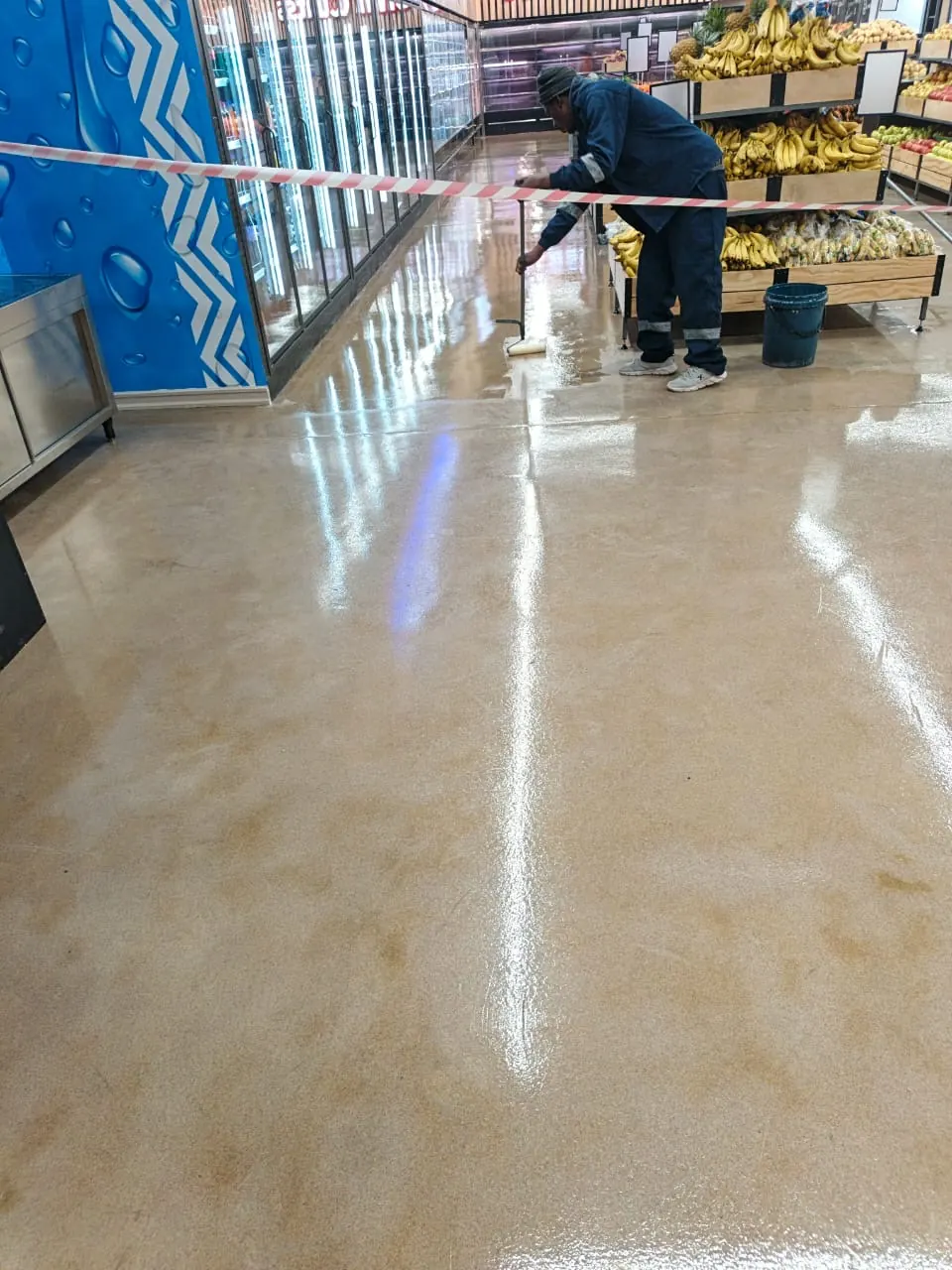
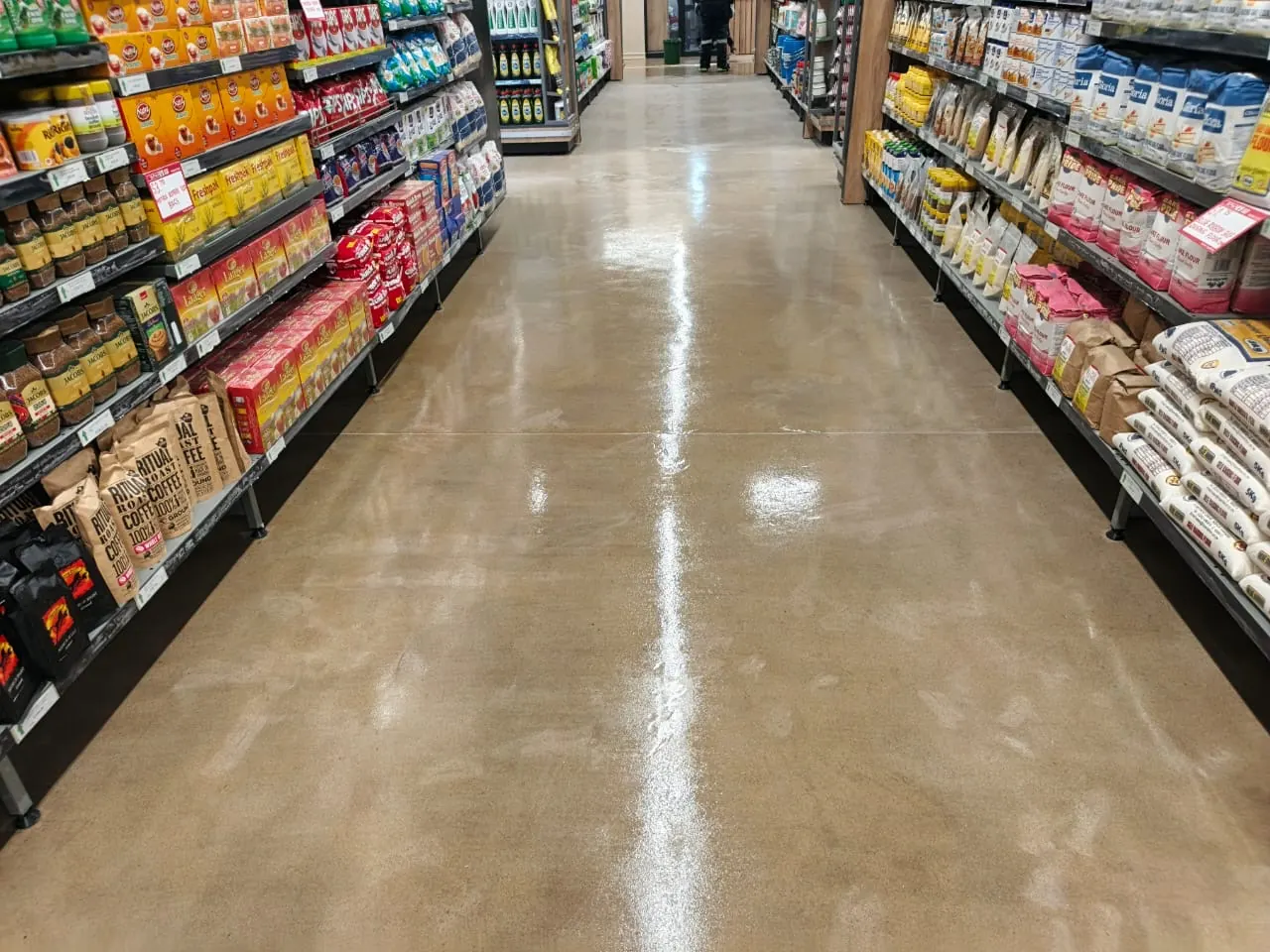
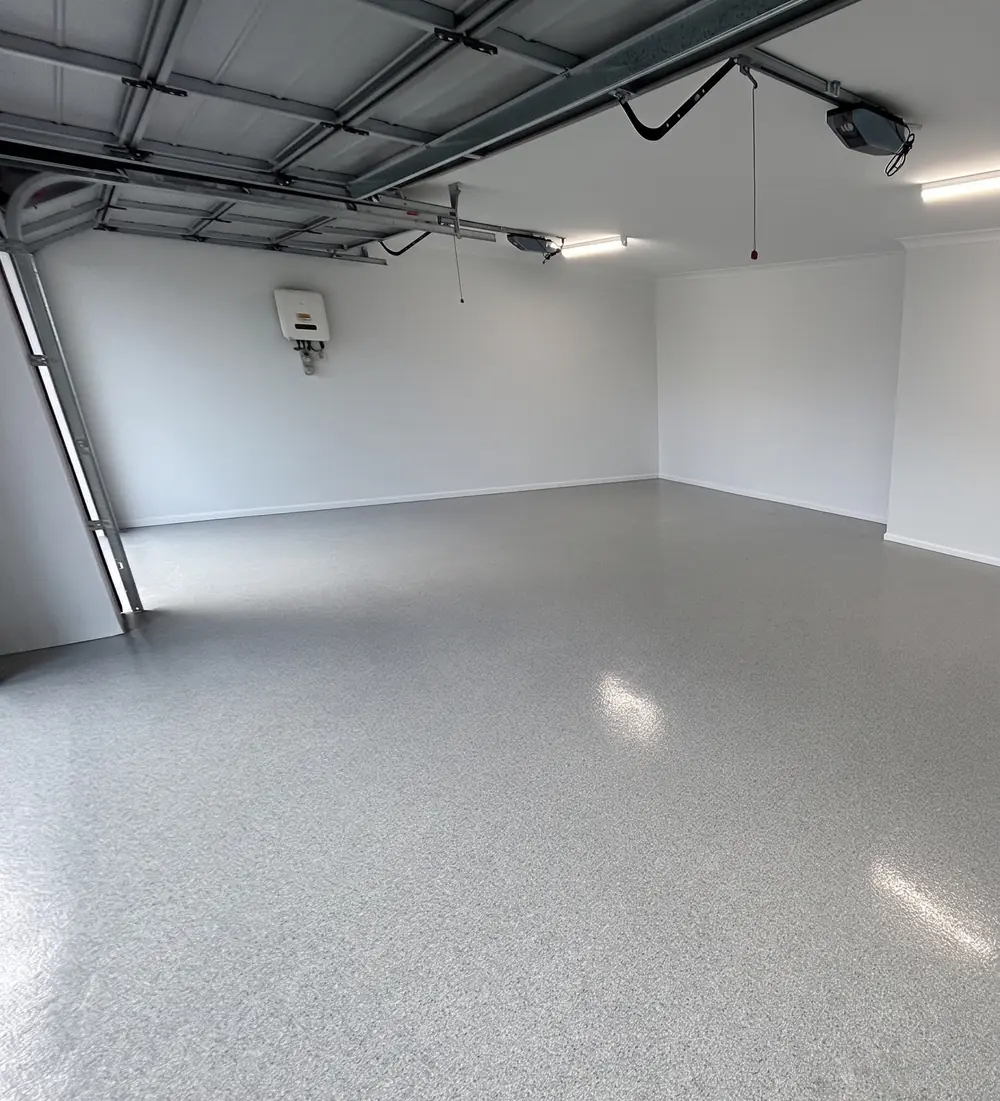
Industrial polyurethane flooring Harare — heavy-duty PU floor with demarcation lines in a racked warehouse in Zimbabwe

Food, beverage & process

Environments with hot wash-down, organic acids, fats and constant hygiene inspection, where a seamless coved floor is a requirement rather than a preference.

  • Food processing and packing halls
  • Commercial and institutional kitchens
  • Bakeries, dairies and breweries
  • Cold stores and chilled distribution
  • Bottling and canning lines
  • Wash bays and hose-down areas
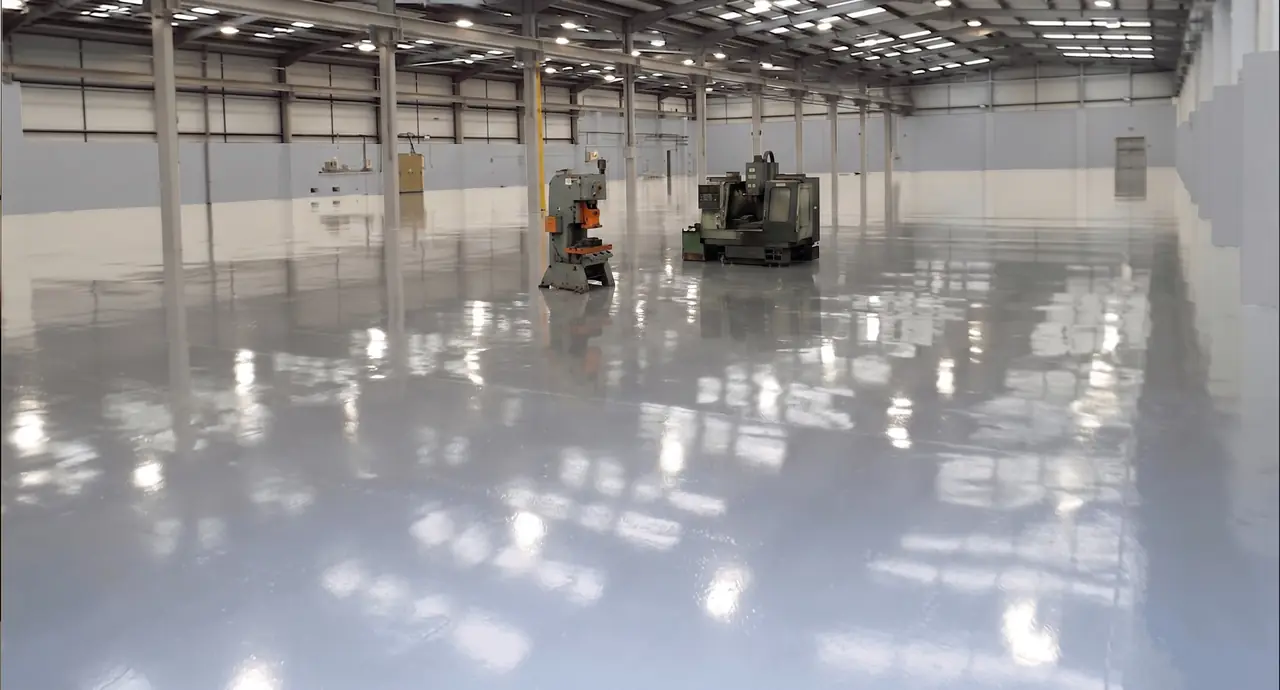
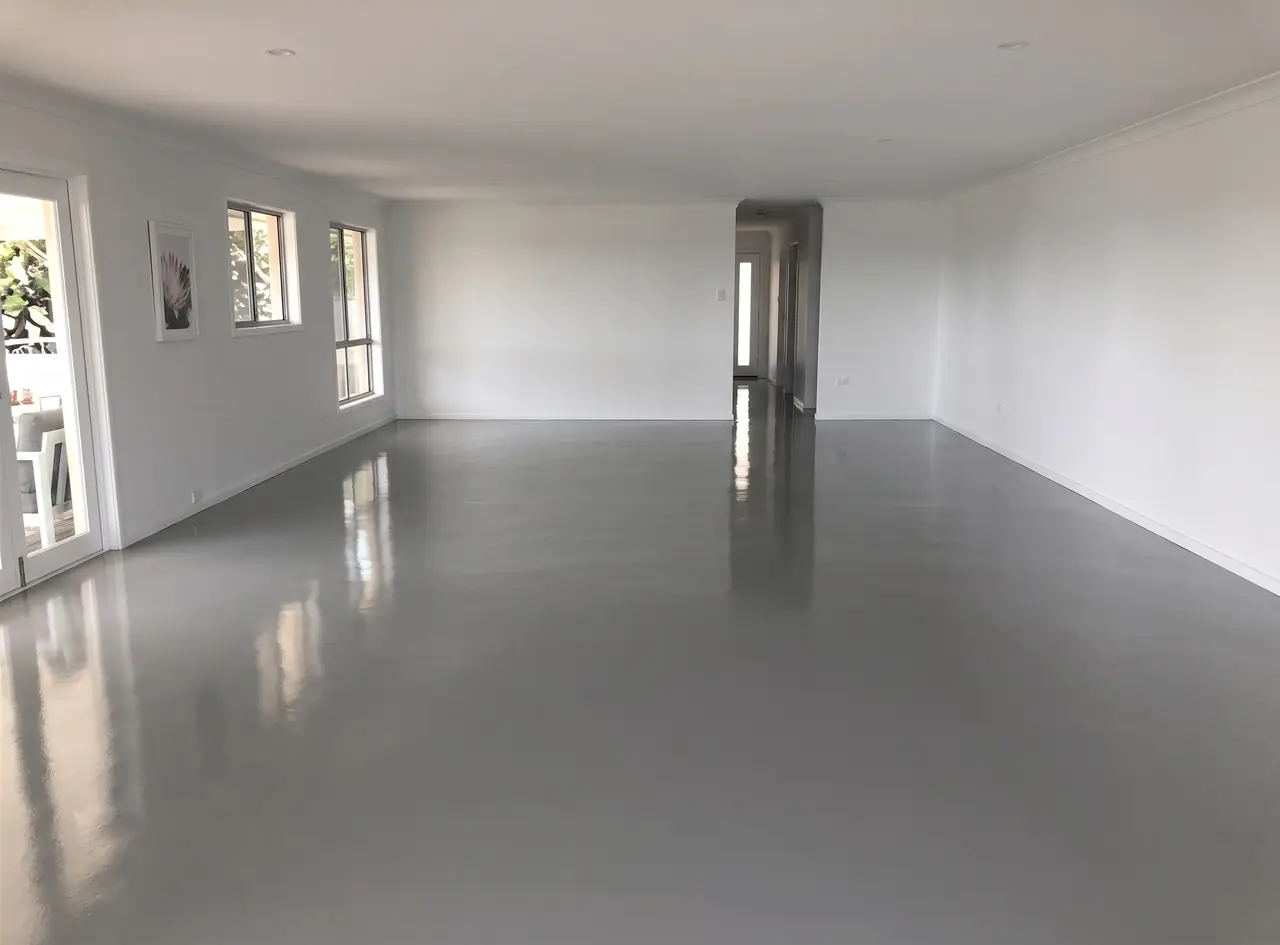
Heavy industrial resin flooring Zimbabwe — large seamless floor in a warehouse facility in Harare

Heavy industrial & commercial

Facilities where impact, point loading and thermal cycling would fracture a rigid system.

  • Manufacturing and production floors
  • Workshops with heavy wheeled traffic
  • Loading bays, ramps and dock levellers
  • Plant rooms and boiler houses
  • Chemical handling and bunded areas
  • Laboratories and clean production areas

Materials & systems

Polyurethane systems and where each is used

Every system below is seamless. The differences are thickness, texture and how much thermal and mechanical abuse the floor is expected to absorb.

SystemThickness and application
PU coating / sealUnder 1 mm. Light-duty areas and as a UV-stable topcoat over an epoxy body coat where colour stability matters.
Self-smoothing PU2–4 mm. Packing, assembly and light processing areas needing a smooth, easily cleaned seamless finish.
PU screed (medium duty)4–6 mm. Commercial kitchens, food preparation and wash-down areas with moderate thermal cycling.
PU screed (heavy duty)6–9 mm. Trowel-applied for steam cleaning, boiling spillage, impact loading and heavy wheeled traffic.
Coved skirtingFormed continuously at the wall junction, typically 100–150 mm high, so the floor can be hosed without water penetrating the joint.
Falls to drainageScreed graded towards gullies and channels, dressed into drain flanges to eliminate the open joint at the drain edge.
Aggregate textureIntegral broadcast graded to the environment — heavier for wet processing, lighter for dry packing and circulation.
Anti-microbial additiveAvailable where a specification or audit standard requires additional surface protection in food and healthcare settings.
Anchor detailingCut-in terminations at doors, drains and perimeters, locking the screed into the slab so edges cannot lift.

Benefits

Why process facilities specify PU

  • Survives thermal shock — steam cleaning and boiling spillage that would debond a rigid epoxy are routine for a PU screed.
  • Passes hygiene audits — seamless, impervious, coved and drained, with no joints or grout for bacteria to colonise.
  • Absorbs impact — dropped tools, pallets and equipment dent rather than fracture the surface.
  • Resists food acids and fats — lactic, citric and fatty residues that attack cementitious floors are shrugged off.
  • Colour stable — aliphatic topcoats do not yellow or chalk under strong Zimbabwean sunlight.
  • Less downtime over the life — a correctly specified PU floor outlasts several cycles of the wrong cheaper system.

Project gallery

Industrial flooring work

More completed work in our project portfolio.

Recent related projects

Industrial flooring delivered recently

Completed

Distribution Centre Floor

Industrial · Harare

Heavy-duty seamless floor laid through a racked storage facility, with safety demarcation lines set out to the racking grid and installed within the system so they cannot wear off.

Completed

Warehouse Resin Installation

Industrial · Pomona, Harare

Large-area seamless floor over a mechanically prepared slab, phased across the facility so operations continued in adjacent bays throughout.

Completed

Commercial Floor Preparation

Commercial · Highlands Park, Harare

Full mechanical grinding and surface preparation of an existing slab using water-suppressed and extracted equipment ahead of a seamless resin system.

Questions answered

Polyurethane Flooring FAQs

Practical answers from our team in Harare. Still unsure? Ask us directly.

What is the real difference between epoxy and polyurethane?

Epoxy is harder and more rigid. Polyurethane is more flexible and has far greater elongation, so it absorbs impact and thermal movement instead of cracking.

Practically: choose epoxy for abrasion resistance and chemical exposure in a stable environment, and polyurethane where the floor experiences temperature swings, steam cleaning or impact.

What is thermal shock and why does it matter?

Thermal shock is the sudden temperature change a floor experiences when boiling water, steam or hot oil hits a surface that was at ambient temperature — common in commercial kitchens and food plants.

A rigid epoxy expands at a different rate to the concrete beneath and can debond. Polyurethane screeds are formulated to move with the slab, which is why they are the standard for food environments.

Is polyurethane flooring food safe?

PU screed systems are the usual specification for food and beverage production because they are seamless, impervious, resistant to organic acids and fats, and can be steam cleaned.

Coved skirtings and falls to drainage are installed as part of the system so the whole floor can be washed down without water sitting in corners.

How thick is a polyurethane screed?

Typically 4 to 9 mm depending on duty. Lighter systems suit food preparation and packing areas; heavier trowel-applied screeds are used where there is impact loading or wheeled traffic.

Thickness is driven by the mechanical and thermal loading, not by area — a thin PU screed under steam cleaning will fail.

Can it be laid in a cold store?

Yes. Polyurethane systems can be installed and cured at lower ambient temperatures than most epoxies, and they tolerate the constant low temperature and freeze-thaw cycling of cold storage.

The specification and cure schedule are adjusted for the operating temperature of the room.

Does polyurethane yellow in sunlight?

Aliphatic polyurethane topcoats are UV stable and hold their colour, unlike standard epoxy which chalks and yellows under direct sun.

For areas with strong natural light or external exposure, we specify a UV-stable PU topcoat even over an epoxy body coat.

How is drainage handled?

Falls are formed into the screed towards gullies and channels, and the system is dressed into drain flanges so there is no open joint at the most vulnerable point.

Coved skirtings run continuously around the perimeter so the floor and wall junction is sealed.

Is it slip resistant?

Yes. PU screeds are usually finished with an integral aggregate texture, and the grade is chosen for the environment — heavier texture for wet processing areas, lighter for dry packing and circulation.

There is a genuine trade-off: more texture means more grip but slightly harder cleaning. We set that balance with you.

How long does installation take and when can we reopen?

Preparation and laying for a typical kitchen or processing area take a few days. Light traffic is usually possible around 24 hours after laying, with full chemical and thermal service after several days.

Many food clients run the work over a shutdown or weekend, and we plan the programme around that.

Can it go over an existing floor?

Over sound, mechanically prepared concrete, yes. Over existing tiles or a failing resin system, generally no — those must be removed.

Tiles in wash-down areas frequently hide saturated bedding underneath, which has to be dealt with before any new system is laid.

What maintenance does it need?

Routine scrubbing with a neutral or mildly alkaline detergent and a rotary scrubber. Avoid strong solvents and undiluted acids.

Because the surface is seamless there is no grout to degrade, so cleaning stays effective for the life of the floor.

Do you work outside Harare for industrial projects?

Yes. We are based in Greendale and work across Harare, and we take on industrial and food-sector projects elsewhere in Zimbabwe where the scope justifies it.

Tell us the location and the operating environment and we will advise honestly on whether we can deliver our standard there.

Where we work

Polyurethane Flooring across Harare

We work from 33 Western Road, Greendale, and cover Harare and the surrounding suburbs. Travel time matters on a project like this — being local means we can get back to site quickly if something needs attention after handover.

Outside these areas? Tell us where the property is and we will let you know honestly whether we can deliver our standard there.

  • Greendale
  • Borrowdale
  • Highlands
  • Avondale
  • Mount Pleasant
  • Marlborough
  • Belgravia
  • Chisipite
  • Newlands
  • Glen Lorne
  • Msasa
  • Pomona
  • Westgate
  • Hatfield
  • Ballantyne Park
  • Kamfinsa

Request a Polyurethane Flooring quote

Tell us the property, the suburb and roughly what needs doing. We will visit, measure properly and send an itemised quotation — no obligation.

Request a Quote WhatsApp Us