Est. 2018 · Registered Zimbabwean Contractor
0772 328 052 info@tawaka.co.zw 33 Western Rd, Greendale, Harare
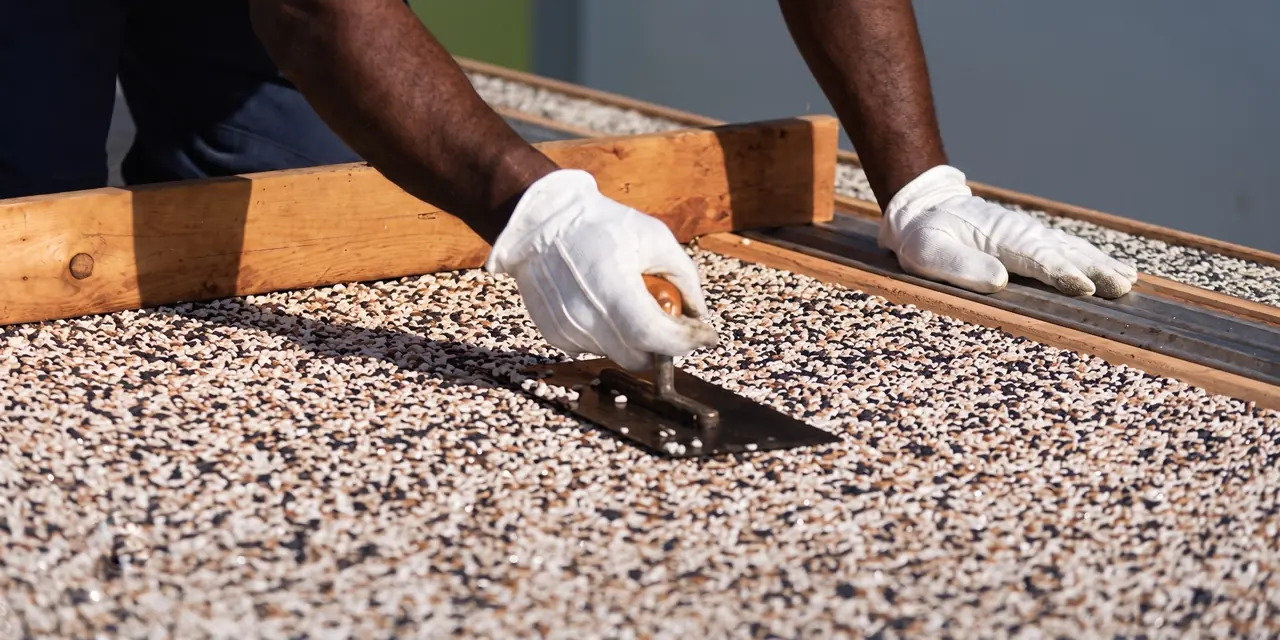
Terrazzo flooring Harare — Tawaka Contracting craftsman hand-trowelling terrazzo aggregate to level within timber formwork in Zimbabwe

Terrazzo FlooringHand-Laid In-SituGround & Polished

Terrazzo, laid theway it lasts.

In-situ terrazzo flooring across Harare — cast by hand, cured properly, then ground back and polished to expose the aggregate evenly. A floor measured in decades, not seasons.

Service overview

A floor with no joints to fail

Terrazzo is the oldest surviving trade in our business, and the one that most clearly separates contractors who can do it from contractors who say they can. It cannot be rushed, it cannot be corrected once cast, and the quality of the finish is set entirely by the skill of the person laying and the discipline of the grinding sequence.

The material itself is simple: marble, granite or quartz chips cast into a pigmented cement matrix. What makes it valuable is that the aggregate runs through the full depth of the topping. Wear does not reveal a different material underneath, because there is no underneath — it is the same surface all the way down.

Terrazzo flooring in Harare performs particularly well in our climate. It is unaffected by strong UV, stays cool underfoot through summer, and has no grout joints to open up during the rainy season. That is why we specify it so often for verandas, entrances, stairs and public circulation areas.

We also restore existing terrazzo. Dull or stained floors that clients assumed needed replacing can usually be re-ground and re-polished to near-original condition for a fraction of the cost.

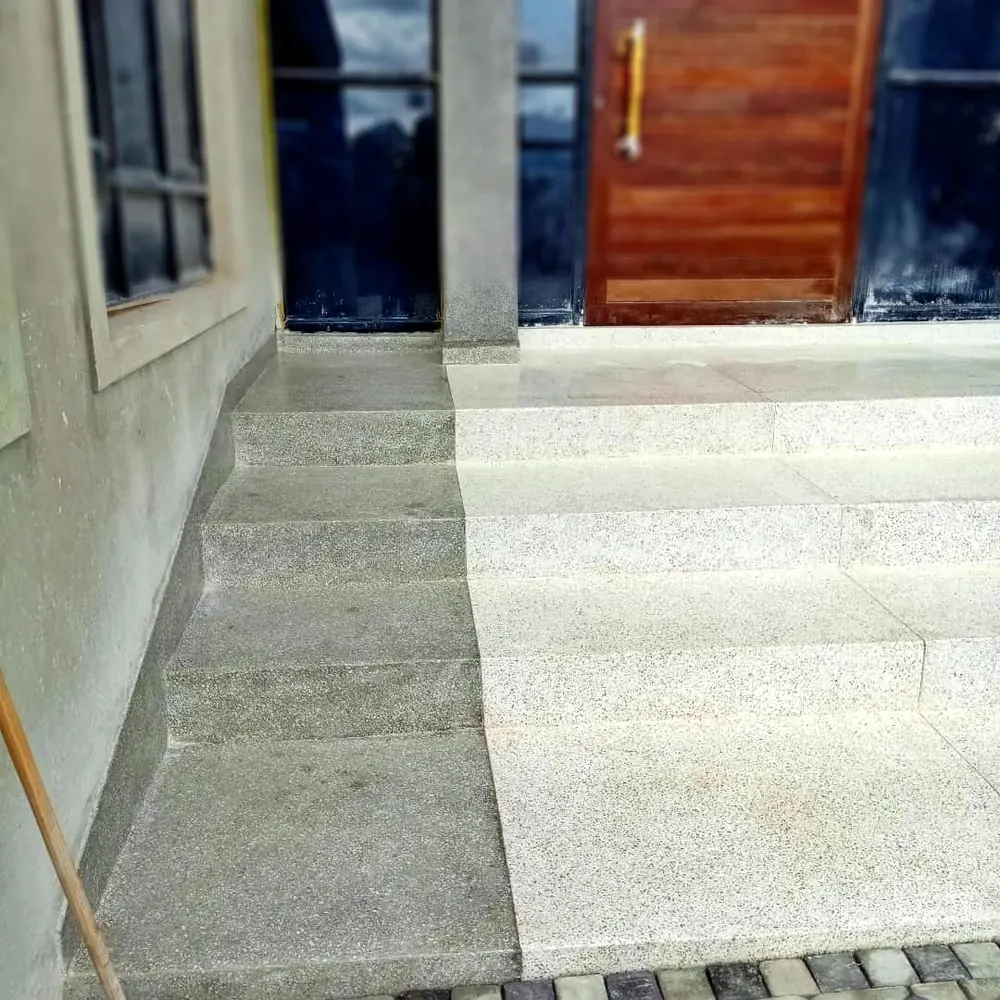
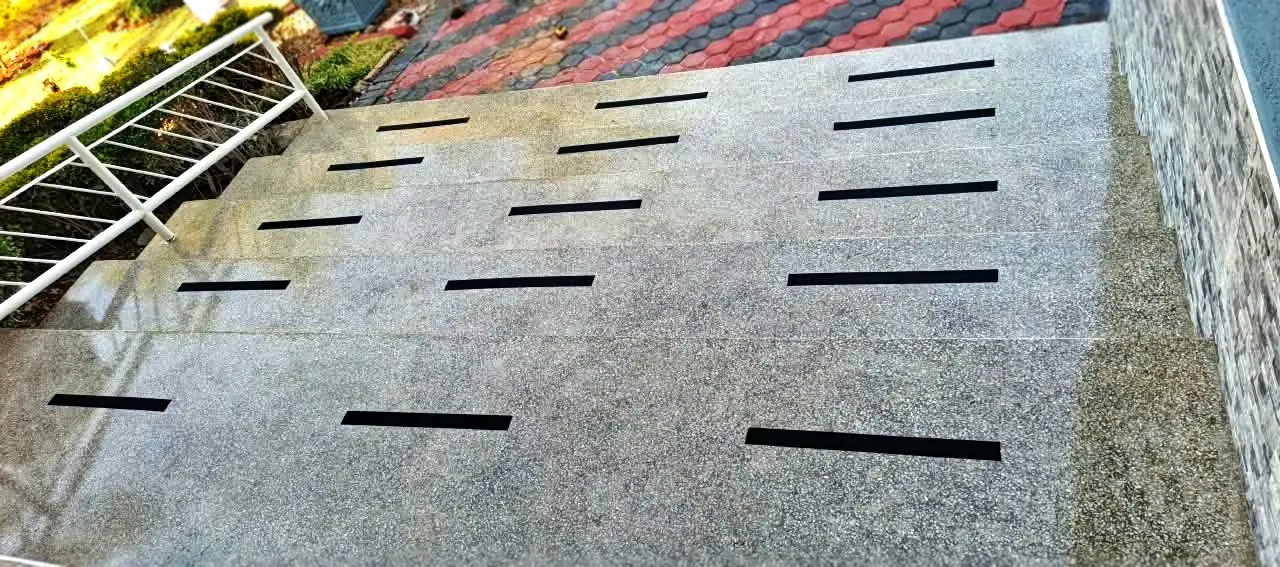
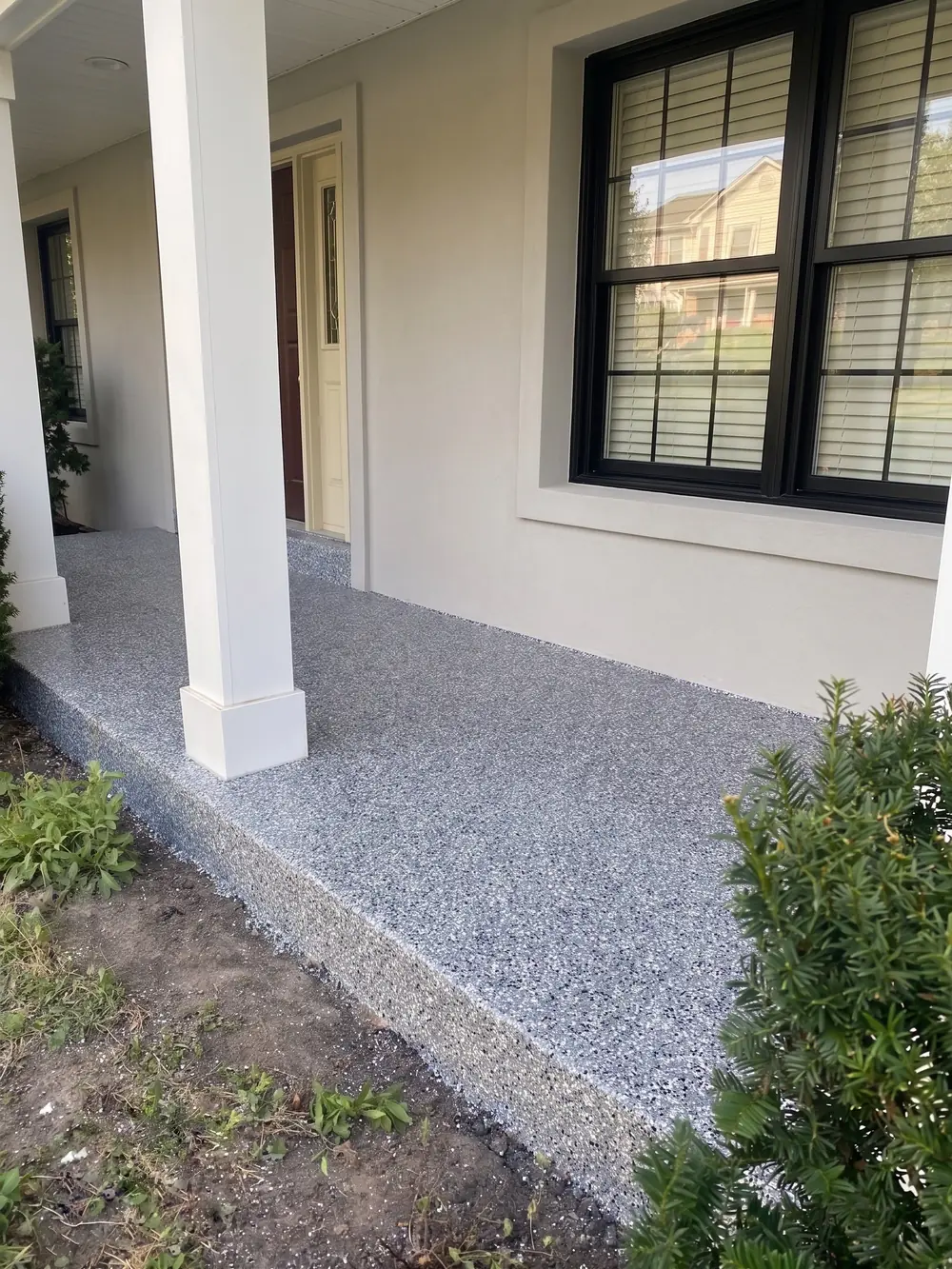
Terrazzo veranda Harare — completed exterior terrazzo walkway with crisp edge detail around a column base in Zimbabwe

Why Tawaka

Why our terrazzo comes out even

The two failures you see in poor terrazzo are patchy aggregate exposure and random cracking. Both are avoidable, and both are set before the grinder is switched on.

  • Consistent batching — matrix and aggregate proportions kept identical across every mix, so colour and chip density do not shift halfway across the floor.
  • Even compaction — the topping is rolled and trowelled to uniform density. Uneven compaction is what causes patchy exposure after grinding.
  • Divider strips set properly — panels sized to the area, strips laid true to line and level, giving controlled shrinkage instead of random cracks.
  • Full cure before grinding — we wait. Grinding green terrazzo tears aggregate out of the matrix and leaves pits that cannot be polished away.
  • Progressive grit sequence — successive passes from coarse to fine, with grouting of pinholes between stages, rather than one aggressive pass.
  • Correct finish level for the location — full polish internally, honed or matt for external and wet areas where slip resistance matters more than shine.

Our process

How terrazzo is laid

Eight stages across one to two weeks. The waiting is part of the work.

01

Survey and sample panels

We check the base, levels and thresholds, then prepare polished sample panels so you select matrix colour and aggregate from a finished sample rather than a brochure.

02

Base preparation

Substrate cleaned, repaired and keyed. Where required a bonded or unbonded screed base is laid to the correct depth and falls, then allowed to cure.

03

Divider strips

Brass or aluminium strips set out to panel sizes appropriate for the area, fixed true to line and level, and used to define any colour changes.

04

Casting the topping

Matrix and aggregate batched consistently, placed by hand between the dividers, then rolled and trowelled to uniform density and finished flush to the strips.

05

Curing

The topping is protected and cured for the full period. This is the stage most often shortened by others, and shortening it is what causes pitting and aggregate pull-out.

06

Grinding

Successive mechanical grinding passes from coarse to fine with water suppression, gradually cutting the matrix back until the aggregate is exposed evenly across every panel.

07

Grouting and polishing

Pinholes and voids filled with matching slurry, cured, then final polishing passes to the specified finish level — full polish, honed or matt.

08

Sealing and handover

Surface cleaned, neutralised and sealed with a penetrating sealer, then walked with you before handover with maintenance guidance provided.

Applications

Residential and commercial terrazzo

Terrazzo suits any area where a floor has to look good and take punishment at the same time.

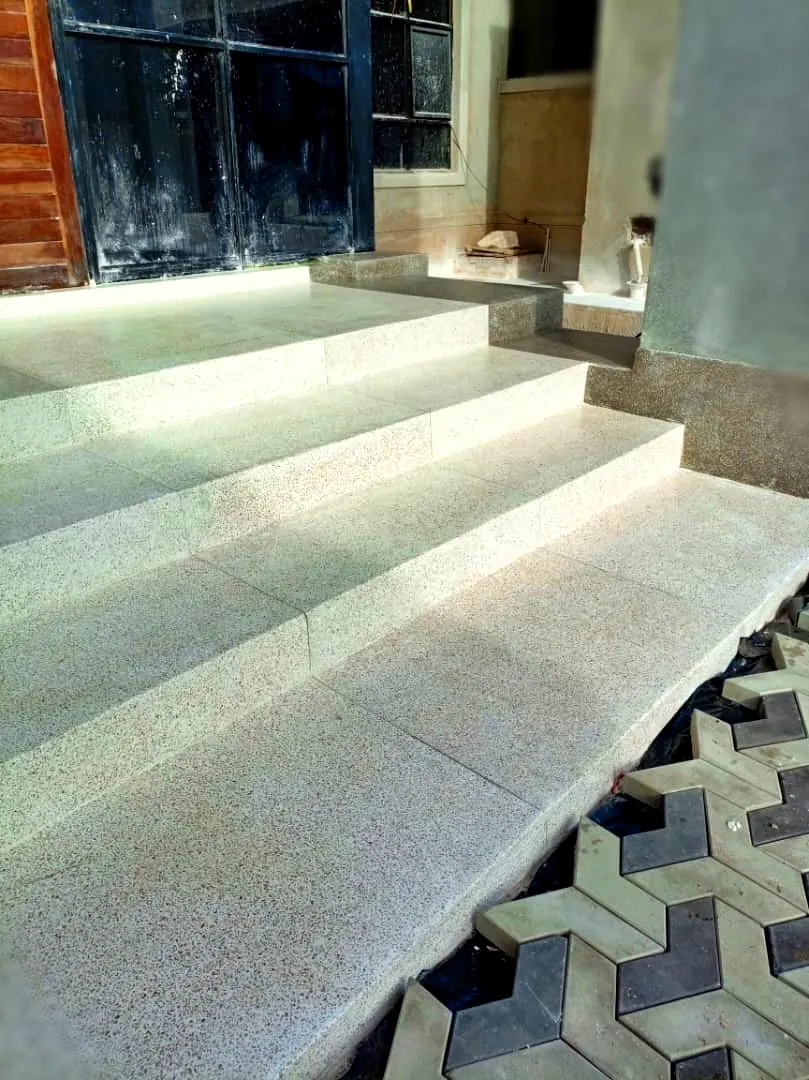
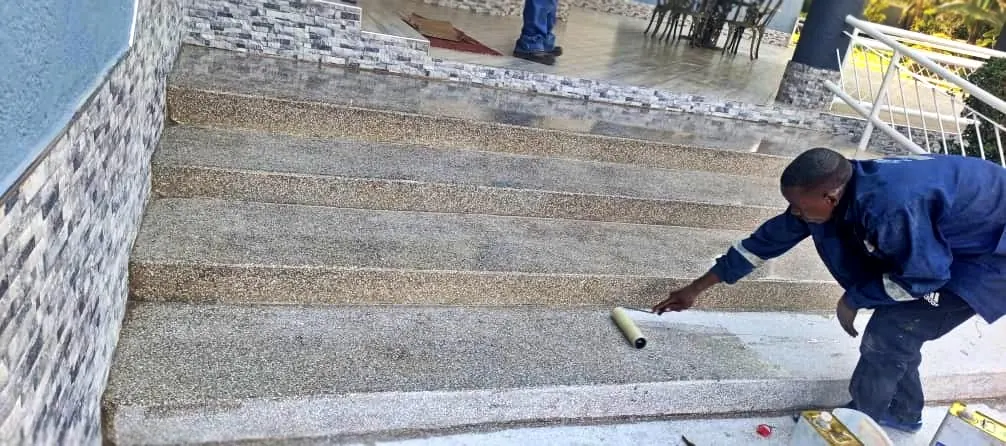
Residential terrazzo flooring Harare — completed terrazzo veranda on a home in Zimbabwe

Residential terrazzo

Homes across Harare where an entrance or veranda has to survive weather, furniture and constant foot traffic without looking tired.

  • Verandas, stoeps and covered walkways
  • Entrance halls and reception areas
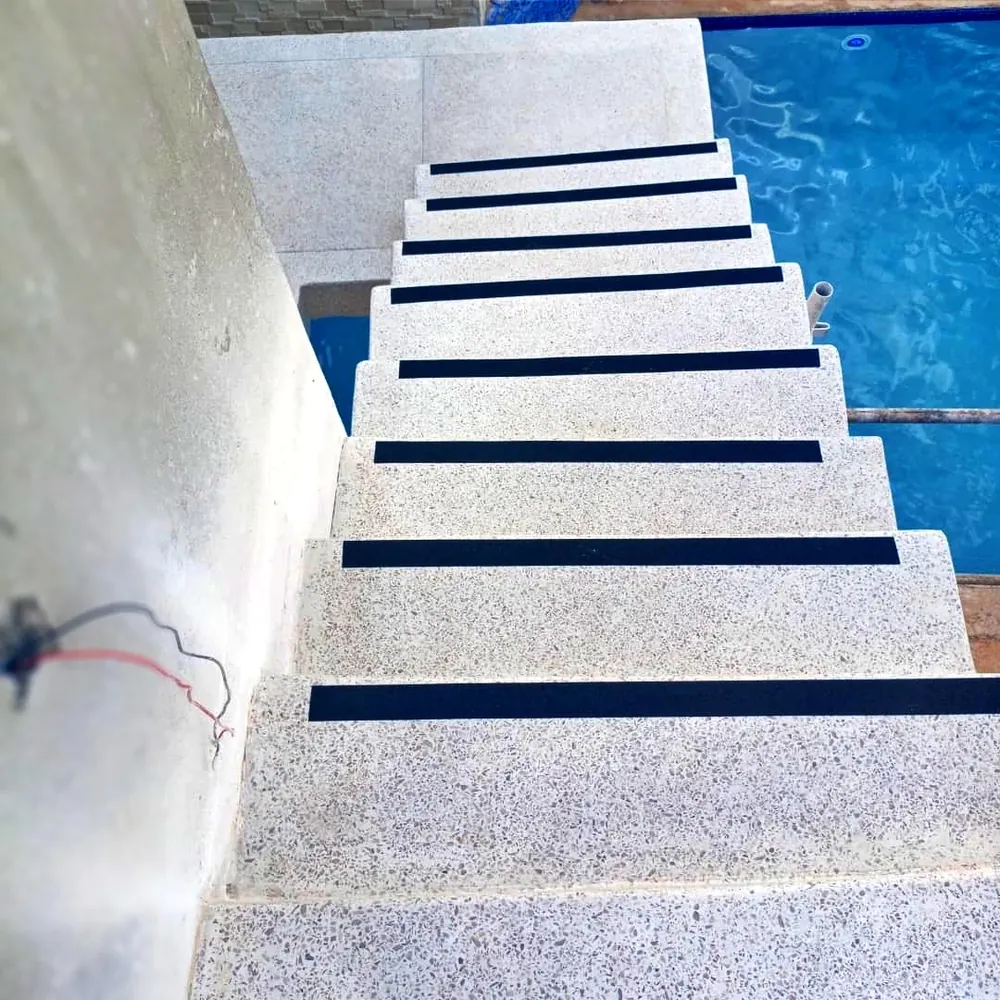
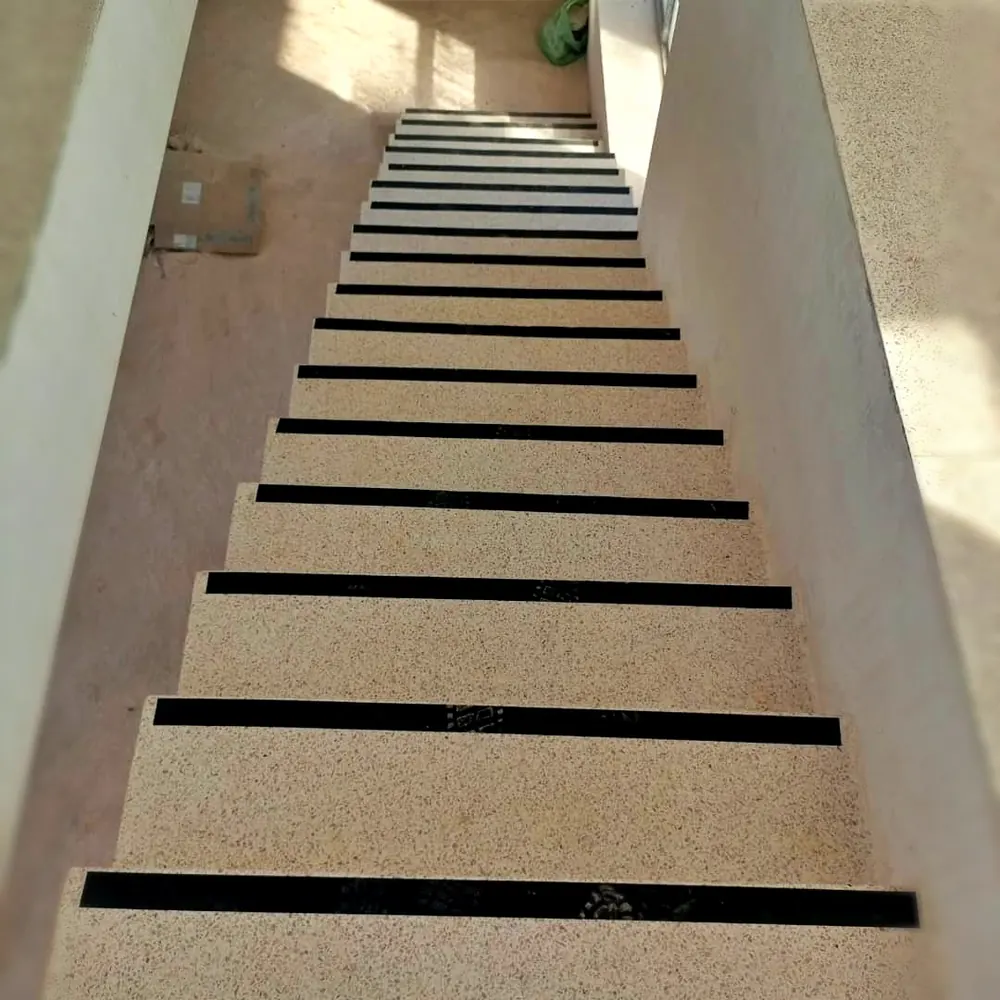
  • Stair treads, risers and landings
  • Patios and pool surrounds in honed finish
  • Window sills, skirtings and vanity tops in precast
  • Restoration of existing terrazzo floors
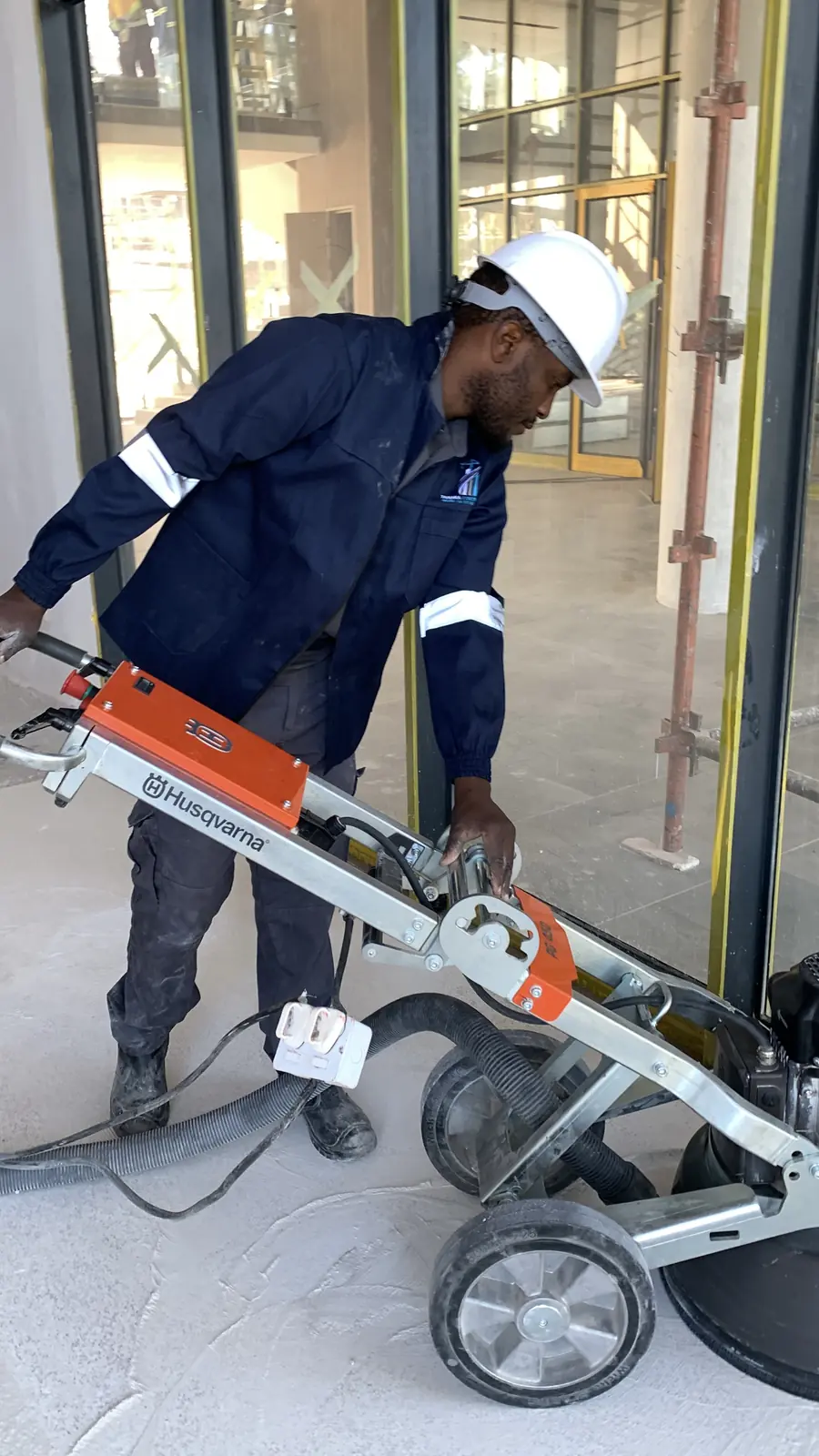
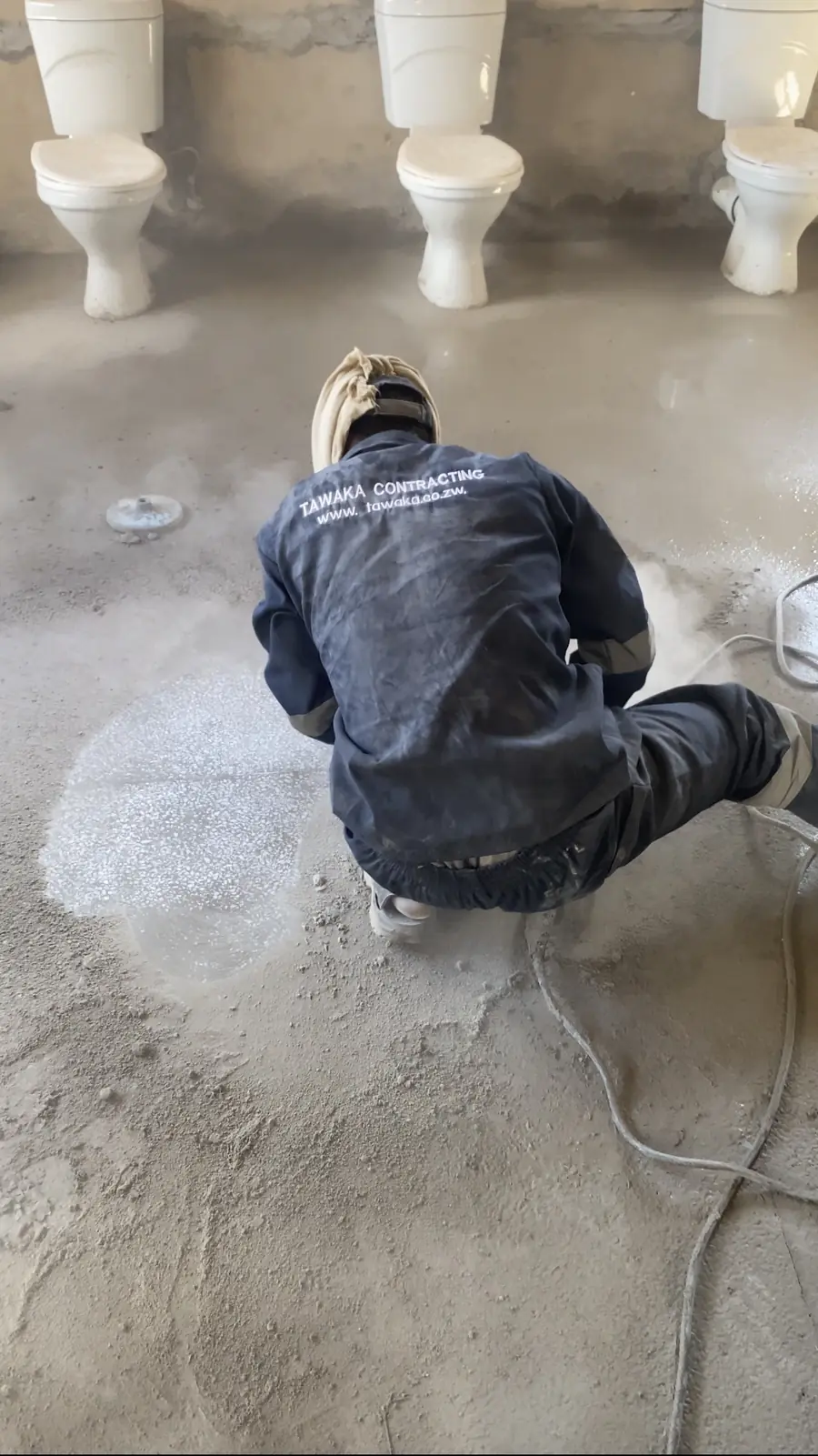
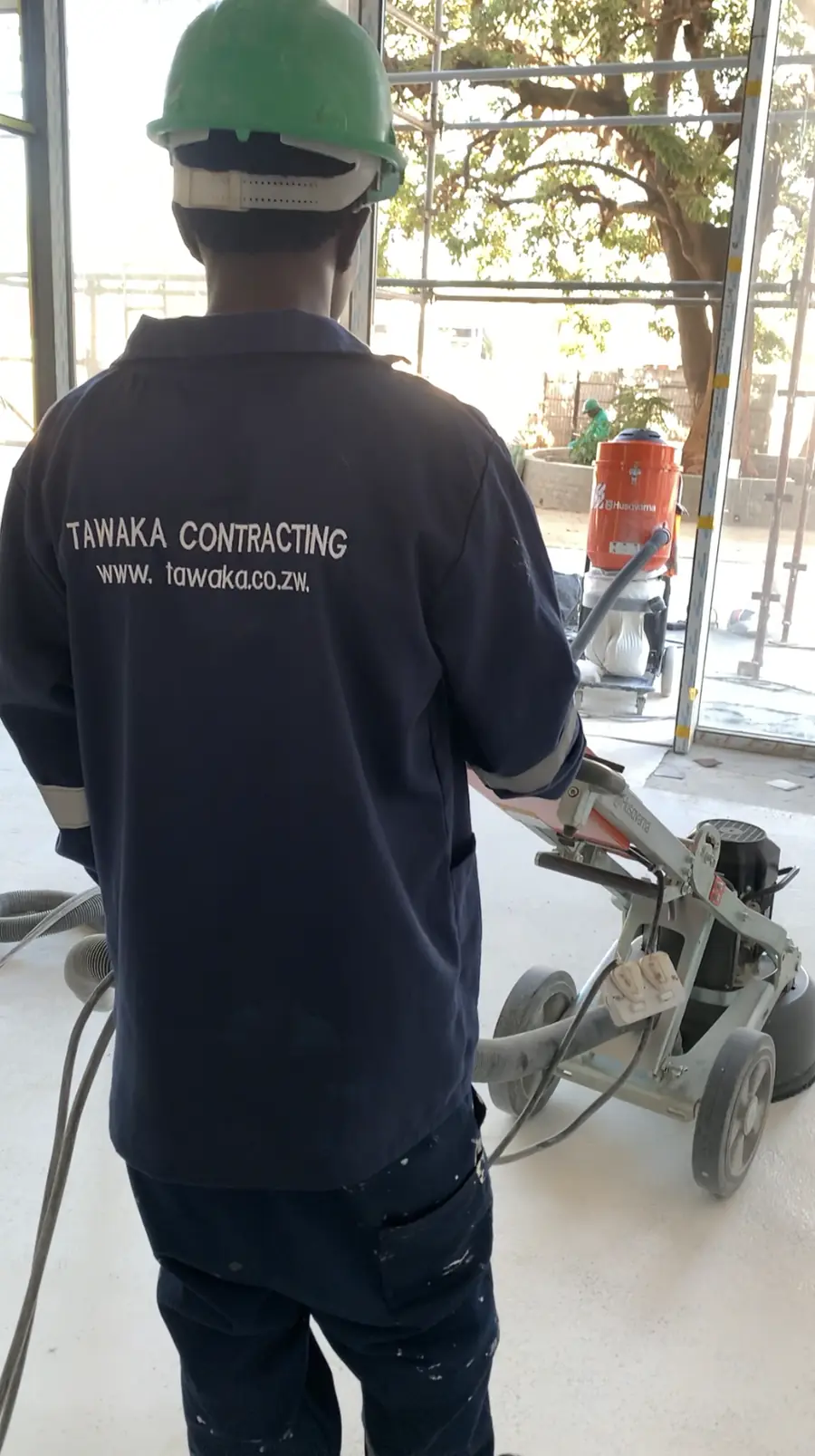
Commercial terrazzo grinding Harare — Tawaka Contracting operative machine-grinding a terrazzo floor at Highlands Park, Zimbabwe

Commercial terrazzo

Public and institutional buildings where the floor is walked on thousands of times a day and cleaned every night.

  • Office and building lobbies
  • Retail and shopping centre circulation
  • Schools, colleges and institutional corridors
  • Clinics and healthcare areas needing seamless hygiene
  • Hotel and hospitality entrances
  • Stairwells and high-traffic public routes

Materials & systems

Terrazzo build-up and options

Terrazzo is specified as a build-up rather than a single product. These are the components we select and why each one matters.

ComponentOptions and purpose
Base / screedBonded or unbonded cementitious screed laid to level or falls, providing a stable, correctly graded substrate for the topping.
MatrixGrey or white cement, pigmented to the selected colour. White cement gives cleaner, brighter results with light aggregates.
AggregateWhite and black marble, granite chips, coloured quartz, or blends. Chip size and proportion determine how busy or uniform the finished floor reads.
Divider stripsBrass for premium and heritage work, aluminium for economy and commercial areas. Control cracking and define colour changes.
In-situ toppingCast, compacted and trowelled on site. The standard approach for continuous floor areas and verandas.
Precast unitsStair treads, risers, sills, skirtings and vanity tops cast off site and installed, where casting in place is impractical.
Grinding sequenceProgressive grits with water suppression and slurry grouting between passes, controlling how evenly the aggregate is revealed.
Finish levelFull polish for interior prestige areas; honed or matt for external, wet and ramped areas where slip resistance is the priority.
SealerPenetrating, breathable sealer that protects against staining without forming a surface film that can wear off in patches.

Benefits

Why specify terrazzo

  • Exceptional lifespan — measured in decades. Terrazzo installed in institutional buildings generations ago is still in service today.
  • Renewable, not disposable — when it dulls it is re-ground and re-polished rather than demolished and replaced.
  • Seamless and hygienic — no joints or grout lines for dirt, water or bacteria to collect in, which is why healthcare specifies it.
  • Built for this climate — UV stable, cool underfoot, and unaffected by the wet season.
  • Genuinely bespoke — matrix colour, aggregate blend and panel layout are set by you, so no two floors are identical.
  • Low running cost — sweep, damp mop with neutral cleaner, re-seal occasionally. No specialist maintenance contract required.

Project gallery

Terrazzo work in Harare

More completed flooring in our project portfolio.

Recent related projects

Terrazzo delivered recently

Completed

Residential Terrazzo Veranda

Residential · Harare

Exterior terrazzo veranda and walkway hand-laid within formwork, ground back to expose aggregate evenly, and finished with a crisp edge detail carried around the column base.

Completed

Commercial Floor Grinding

Commercial · Highlands Park, Harare

Mechanical grinding and polishing of a large floor area using water-suppressed equipment, phased so adjacent areas of the building stayed in use.

Completed

Terrazzo Laying & Finishing

Residential · Harare

Exterior terrazzo laid by hand within timber formwork, trowelled to uniform density and ground back to a consistent honed finish suited to outdoor use.

Questions answered

Terrazzo Flooring FAQs

Practical answers from our team in Harare. Still unsure? Ask us directly.

What exactly is terrazzo?

Terrazzo is a composite floor made by casting marble, granite or quartz chips into a cement or resin matrix, letting it cure, then grinding the surface back to expose the aggregate and polishing it.

It is one of the oldest continuously used floor finishes in the world, and it survives because it is essentially a solid stone surface cast in place with no joints for dirt to collect in.

How long does terrazzo last?

Properly laid in-situ terrazzo routinely lasts decades. Because the aggregate runs through the full depth of the topping rather than sitting on the surface, wear does not expose a different material underneath.

When it eventually dulls, it is re-ground and re-polished rather than replaced — which is why terrazzo is still found in institutional buildings put up sixty years ago.

Is terrazzo more expensive than tiles?

The initial cost per square metre is usually higher than ceramic tiling, because terrazzo is a multi-stage process involving casting, curing, grinding and polishing over several days.

Over the life of a building it is often cheaper, because there are no joints to fail, no individual units to crack and lift, and the surface can be renewed rather than ripped out.

Can terrazzo be laid over an existing floor?

Yes, provided the base is structurally sound and we can accommodate the additional thickness at doorways and thresholds. In-situ terrazzo needs a bonded or unbonded screed base of adequate depth.

We check levels and thresholds at survey stage, because discovering a height clash after casting is a serious problem.

What colours and aggregates are available?

The matrix can be pigmented in a wide range of colours, and the aggregate can be white or black marble, granite chips, coloured quartz or a blend. The proportion and chip size change the character completely.

We prepare sample panels so you choose from a finished, polished sample rather than from a photograph.

Why are divider strips used?

Brass or aluminium divider strips control cracking by breaking a large area into panels, allow colour changes, and give the layer a clean line to work to.

Terrazzo is a cementitious material, so it shrinks slightly as it cures. Dividers put that movement in a controlled line instead of a random crack.

Is terrazzo slippery?

Polished terrazzo is smooth, so for external areas, ramps and wet zones we specify a lighter honed finish or a lightly textured surface rather than a full polish.

Our exterior veranda and walkway work is typically finished to a matt or honed level for that reason.

How long does installation take?

Terrazzo cannot be rushed. Base preparation and casting take a few days, then the topping must cure — typically several days — before grinding can begin, followed by successive grinding passes and finally sealing.

A typical veranda or entrance area runs one to two weeks end to end. We build the curing time into the programme upfront.

How do I maintain a terrazzo floor?

Sweep or vacuum, then damp mop with a pH-neutral cleaner. Avoid acidic cleaners, which etch the cement matrix and any marble aggregate.

Re-seal periodically depending on traffic. Correctly maintained, it needs no other treatment for years.

Can existing terrazzo be restored?

Usually yes, and it is often the best value work we do. Dull, stained or lightly damaged terrazzo can be mechanically re-ground, honed, polished and re-sealed back to near-original condition.

We assess whether the topping has enough thickness left to take a grind before recommending it.

Where does terrazzo work best in Zimbabwe?

It performs extremely well in our climate. It is unaffected by strong UV, stays cool underfoot, and handles the wet season without the joint failures that affect tiled external areas.

We use it most on verandas, entrances, stair treads, corridors and high-traffic public floors across Harare.

Do you do precast terrazzo as well as in-situ?

Yes. Precast terrazzo units are useful for stair treads, risers, window sills, skirtings and vanity tops, where casting in place is impractical.

Precast elements are usually combined with an in-situ floor so the whole area reads as one material.

Where we work

Terrazzo Flooring across Harare

We work from 33 Western Road, Greendale, and cover Harare and the surrounding suburbs. Travel time matters on a project like this — being local means we can get back to site quickly if something needs attention after handover.

Outside these areas? Tell us where the property is and we will let you know honestly whether we can deliver our standard there.

  • Greendale
  • Borrowdale
  • Highlands
  • Avondale
  • Mount Pleasant
  • Marlborough
  • Belgravia
  • Chisipite
  • Newlands
  • Glen Lorne
  • Msasa
  • Pomona
  • Westgate
  • Hatfield
  • Ballantyne Park
  • Kamfinsa

Related services

Often specified together

Most projects need more than one trade. We run them under a single contract so the sequencing is our problem, not yours — see all services or browse our completed projects.

Request a Terrazzo Flooring quote

Tell us the property, the suburb and roughly what needs doing. We will visit, measure properly and send an itemised quotation — no obligation.

Request a Quote WhatsApp Us