Est. 2018 · Registered Zimbabwean Contractor
0772 328 052 info@tawaka.co.zw 33 Western Rd, Greendale, Harare
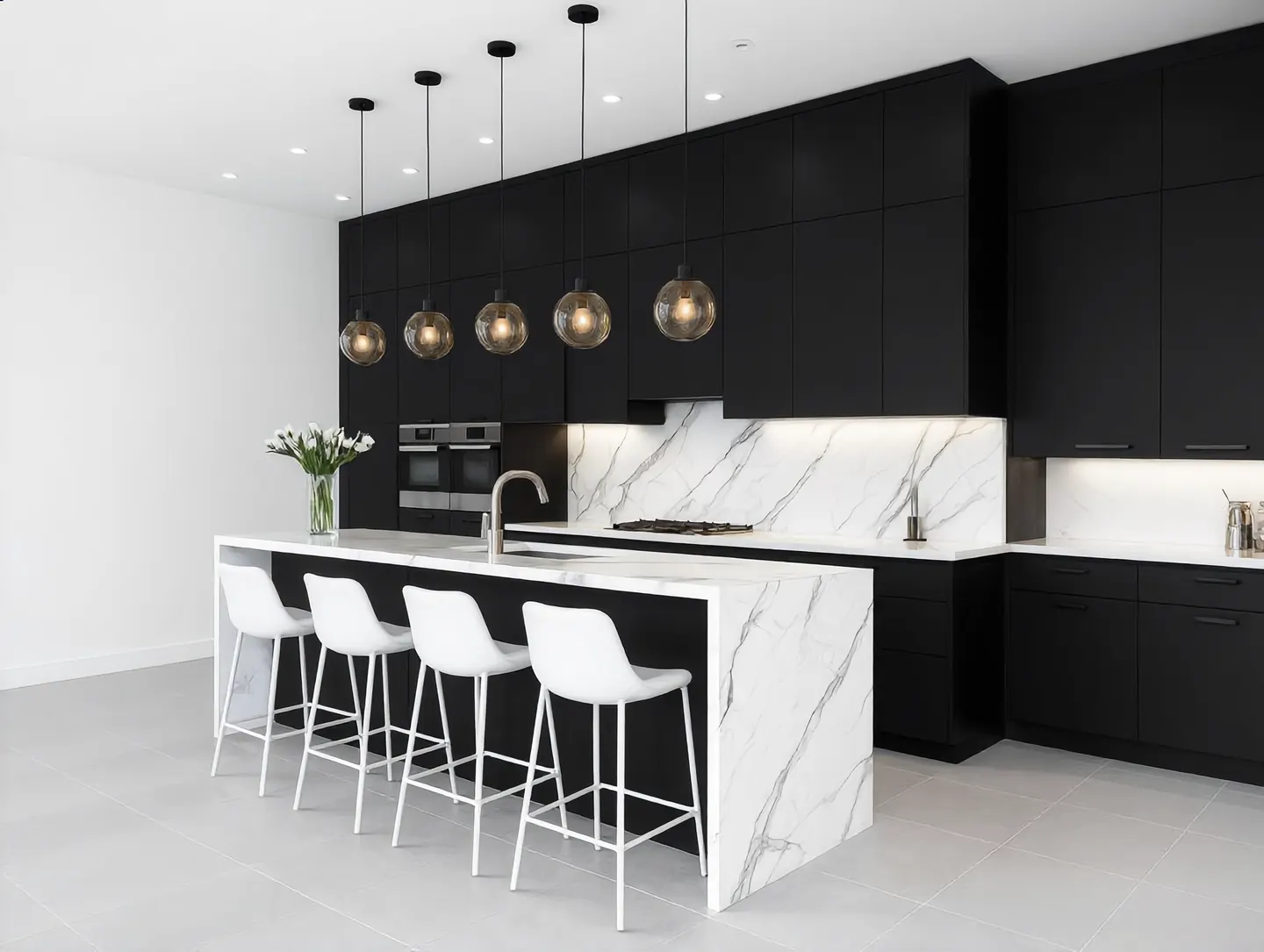
Tiling services Harare — large-format floor tiling and marble-effect splashback in a completed contemporary kitchen in Zimbabwe

TilingFloor & WallPorcelain, Ceramic & Stone

Tiling that staysflat and square.

Floor and wall tiling across Harare in porcelain, ceramic and natural stone — set out properly, laid on a prepared substrate, and waterproofed where it matters.

Service overview

A tiled floor is only as good as what is under it

Almost every tiling failure we are called to repair has the same cause, and it is never the tile. It is a substrate that was not flat, adhesive that was not fully covering the back of the tile, or waterproofing that was skipped in a wet area.

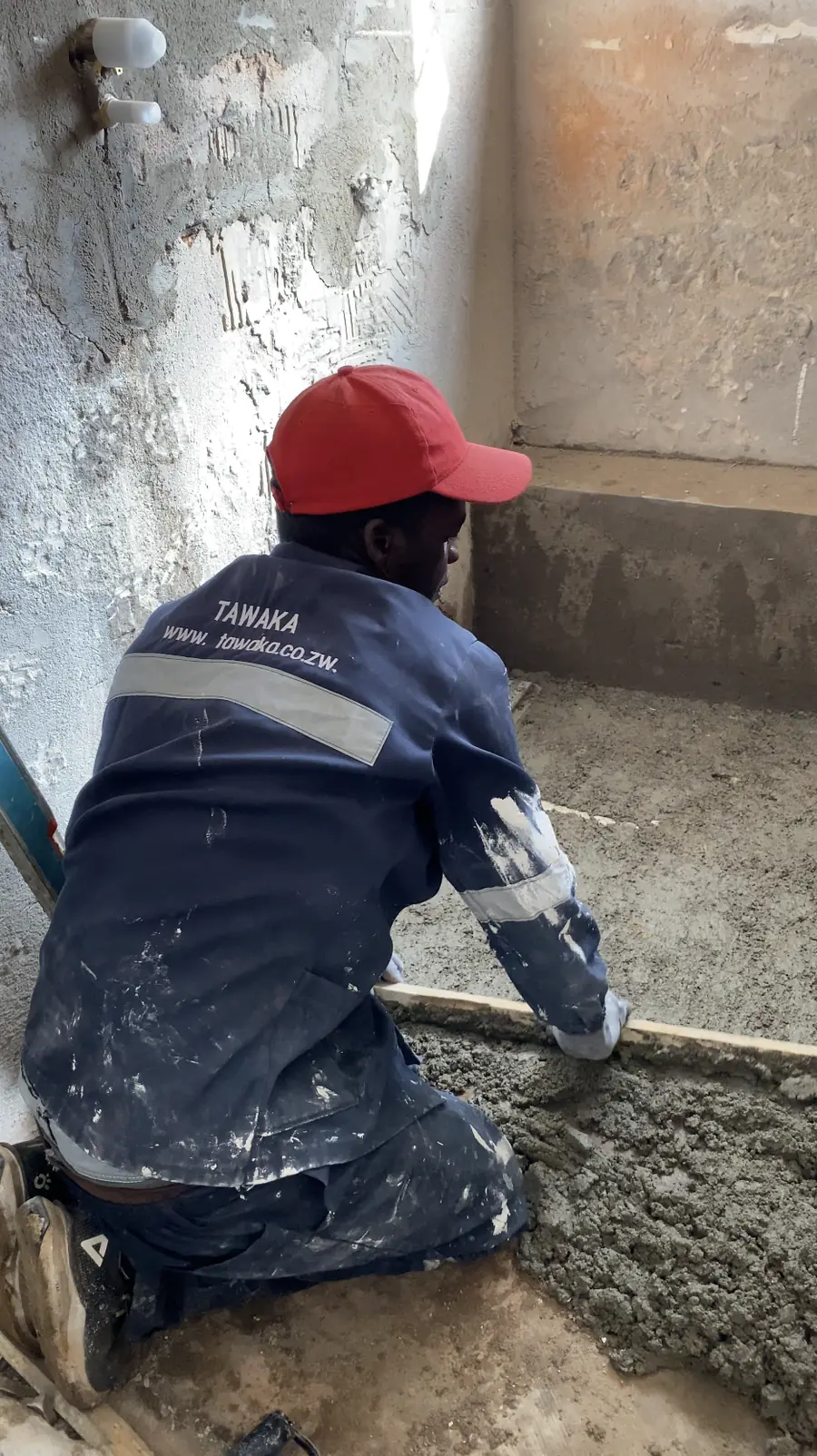
Tawaka Contracting treats tiling as two jobs. The first is preparation: checking and correcting the floor or wall, screeding or skimming where needed, and tanking wet areas. The second is the tiling itself. Clients only see the second, but the first is what determines whether the work survives.

Our tiling services in Harare cover bathrooms, kitchens, living areas, staircases, patios, shopfronts, offices and commercial washrooms. We work in ceramic, porcelain, natural stone and mosaic, and we handle the strip-out and disposal of existing finishes as part of the contract.

Tiling rarely happens on its own. It usually sits inside a wider bathroom renovation or kitchen renovation, which we can deliver as one coordinated package so the trades follow each other in the right order.
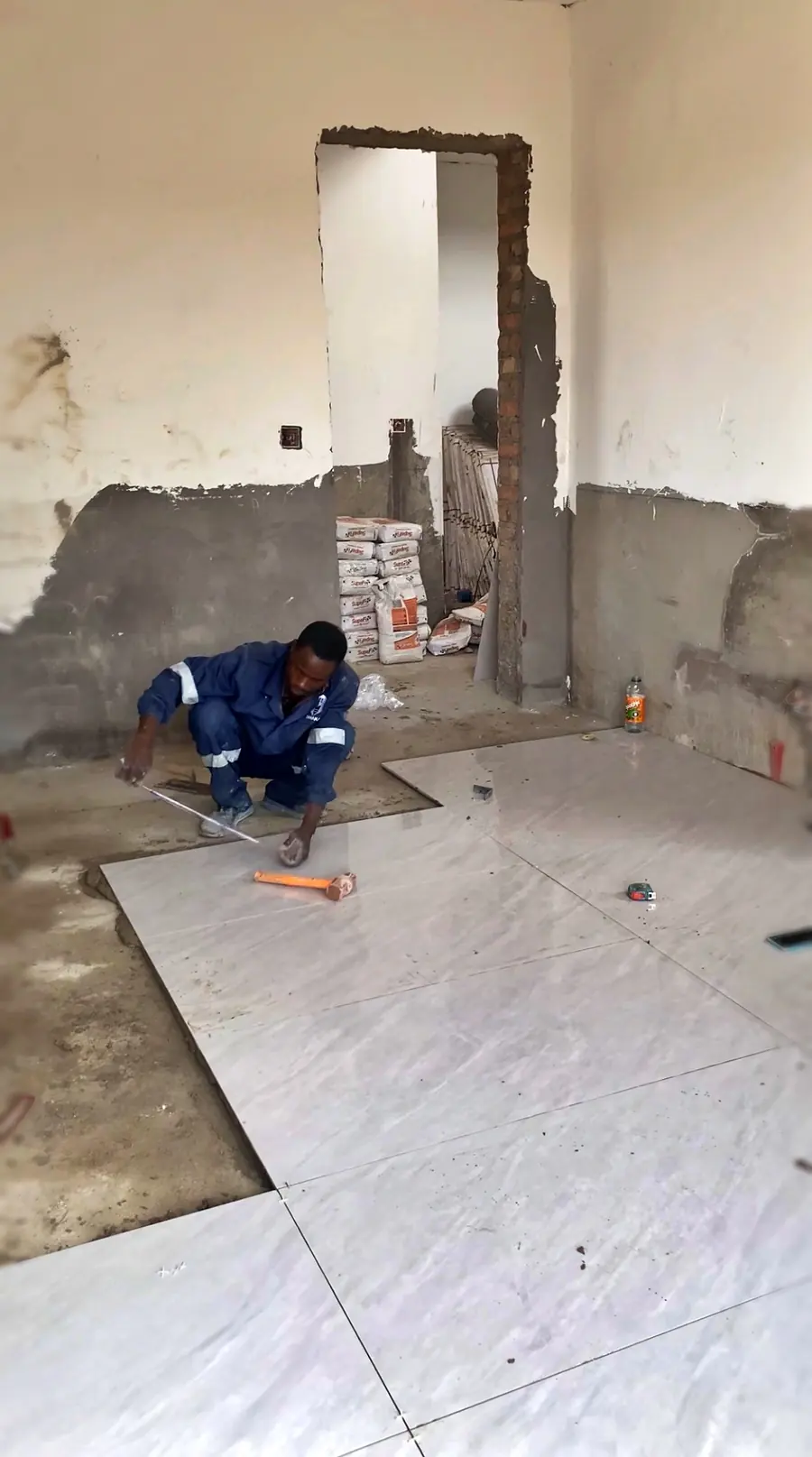
Tilers Harare — Tawaka Contracting tradesman screeding a bathroom floor to level before tiling in Zimbabwe

Why Tawaka

Why our tiling holds up

Anyone can stick a tile to a wall. These are the details that decide whether it is still sound and square in ten years.

  • Setting out before adhesive — we dry-lay and mark the room first so cuts land in the least visible corners and the main sightline stays full-tile.
  • Substrate corrected, not accepted — floors are screeded and walls skimmed to a flat plane before tiling, especially for large-format formats.
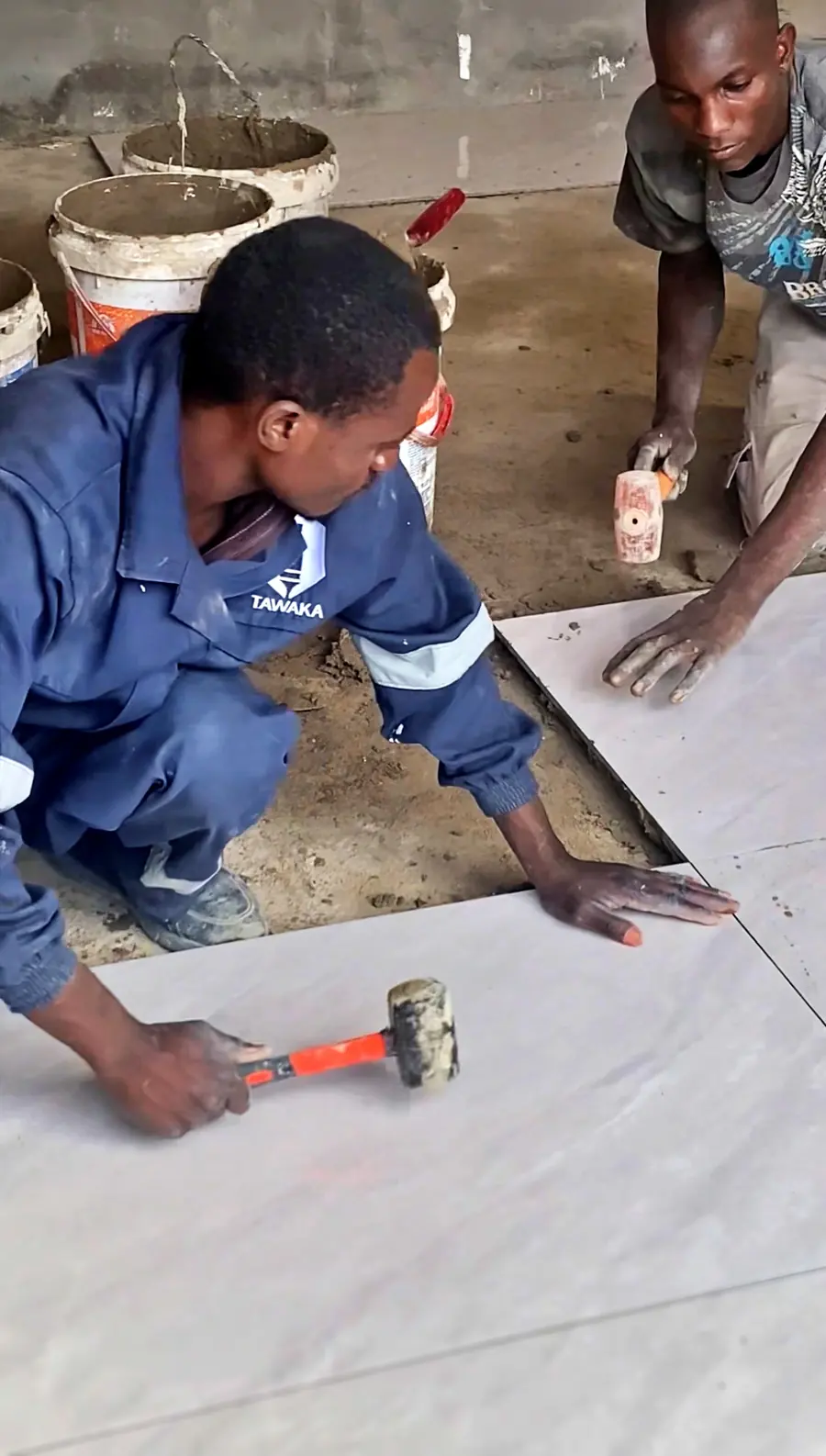
  • Full adhesive coverage — notched trowel plus back-buttering on large tiles. A hollow-sounding tile is a tile that will crack.
  • Wet areas properly tanked — liquid membrane, reinforced at corners and pipe penetrations, taken to the correct height before any tile goes on.
  • Movement joints where they are needed — perimeter and field joints on large or sun-exposed floors so expansion has somewhere to go.
  • Consistent joint width and level — spacers and levelling clips used throughout, so there is no lipping you can feel underfoot.

Our process

How we tile

Seven stages, and the first four happen before a single tile is fixed.

01

Survey and tile selection

We measure the area, check the substrate for level, movement and moisture, and advise on tile size, format and finish for the use — including slip rating for wet and external areas.

02

Strip-out and preparation

Existing finishes removed, old adhesive taken back, rubble cleared, and the area sealed off so dust does not migrate through the property.

03

Substrate correction

Floors screeded to level or to falls, walls skimmed or battened flat, and any structural movement or damp addressed before we go further.

04

Waterproofing

Wet areas tanked with a liquid membrane, reinforced at all corners, junctions and penetrations, and left to cure fully before tiling begins.

05

Setting out and fixing

Room set out from the primary sightline, datum lines marked, then tiles fixed with the correct adhesive, spacers and levelling clips, cuts made with a wet saw for clean edges.

06

Grouting and sealing

Grout applied after full adhesive cure, joints tooled consistently, then silicone to all movement junctions. Natural stone is sealed before and after grouting.

07

Clean and handover

Haze removed, surfaces cleaned, area walked with you, defects closed out, and the room handed over ready for use once fully cured.

Applications

Residential and commercial tiling

Domestic work is about finish quality in a small, closely inspected space. Commercial work adds durability, slip rating and programme pressure.

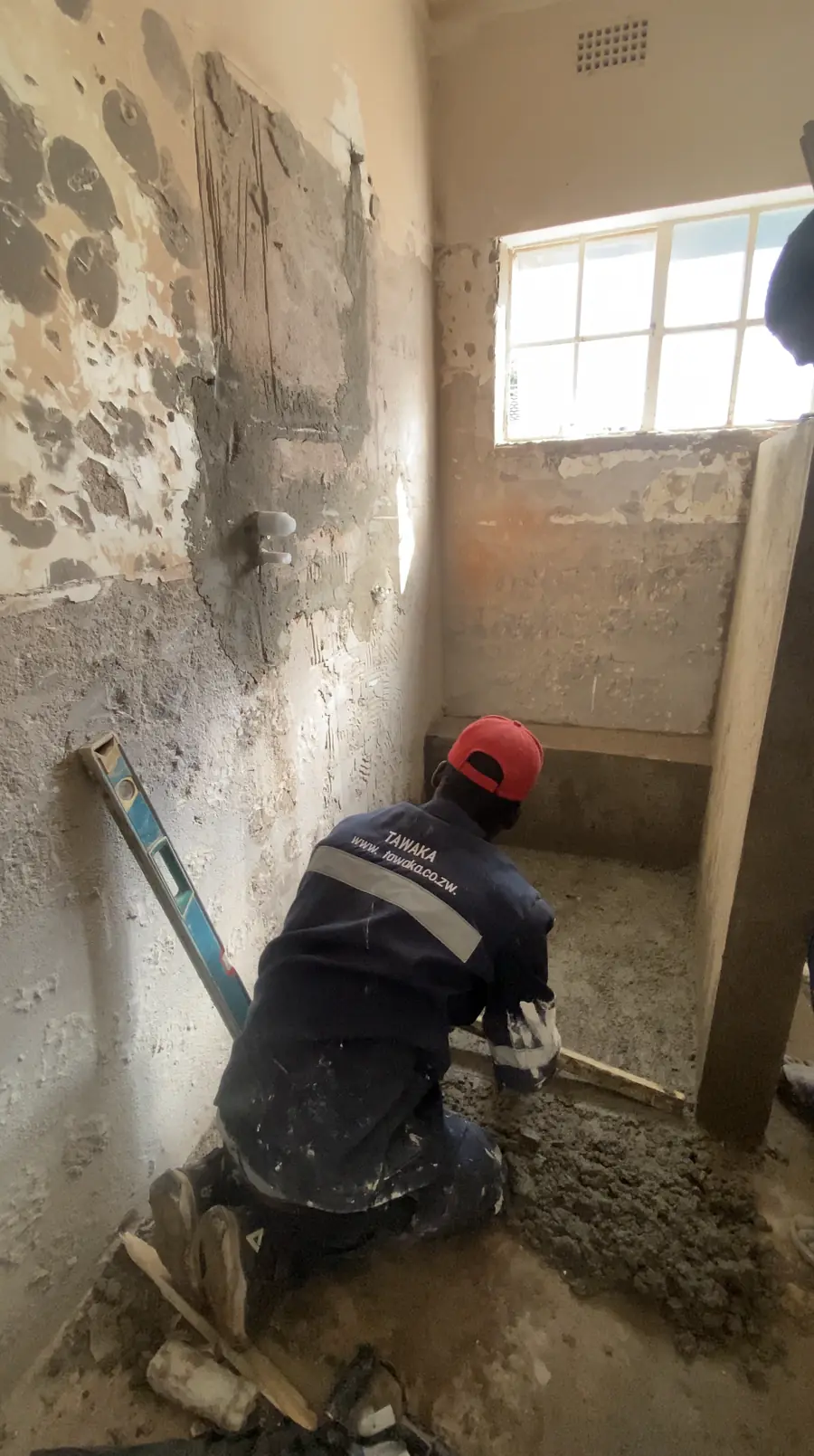
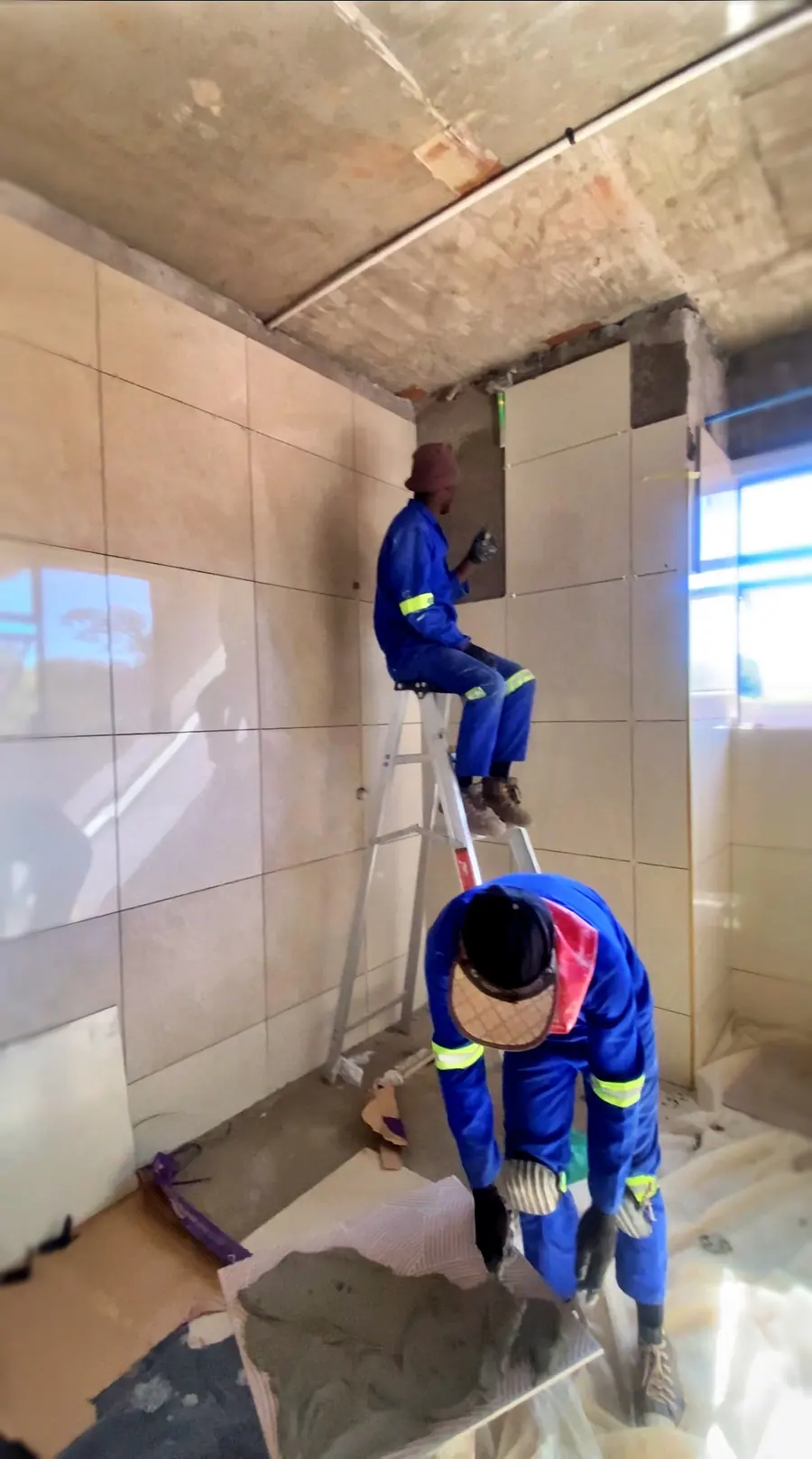
Bathroom tiling Harare — Tawaka Contracting preparing walls and floor for tiling during a bathroom strip-out in Kamfinsa

Residential tiling

Bathrooms, kitchens, living areas and outdoor spaces in homes across Harare, usually as part of a wider renovation.

  • Bathroom floors, walls and shower enclosures
  • Kitchen floors and splashbacks
  • Open-plan living areas in large-format porcelain
  • Staircases, landings and skirting tiles
  • Patios, verandas and pool surrounds
  • Feature walls and mosaic detailing
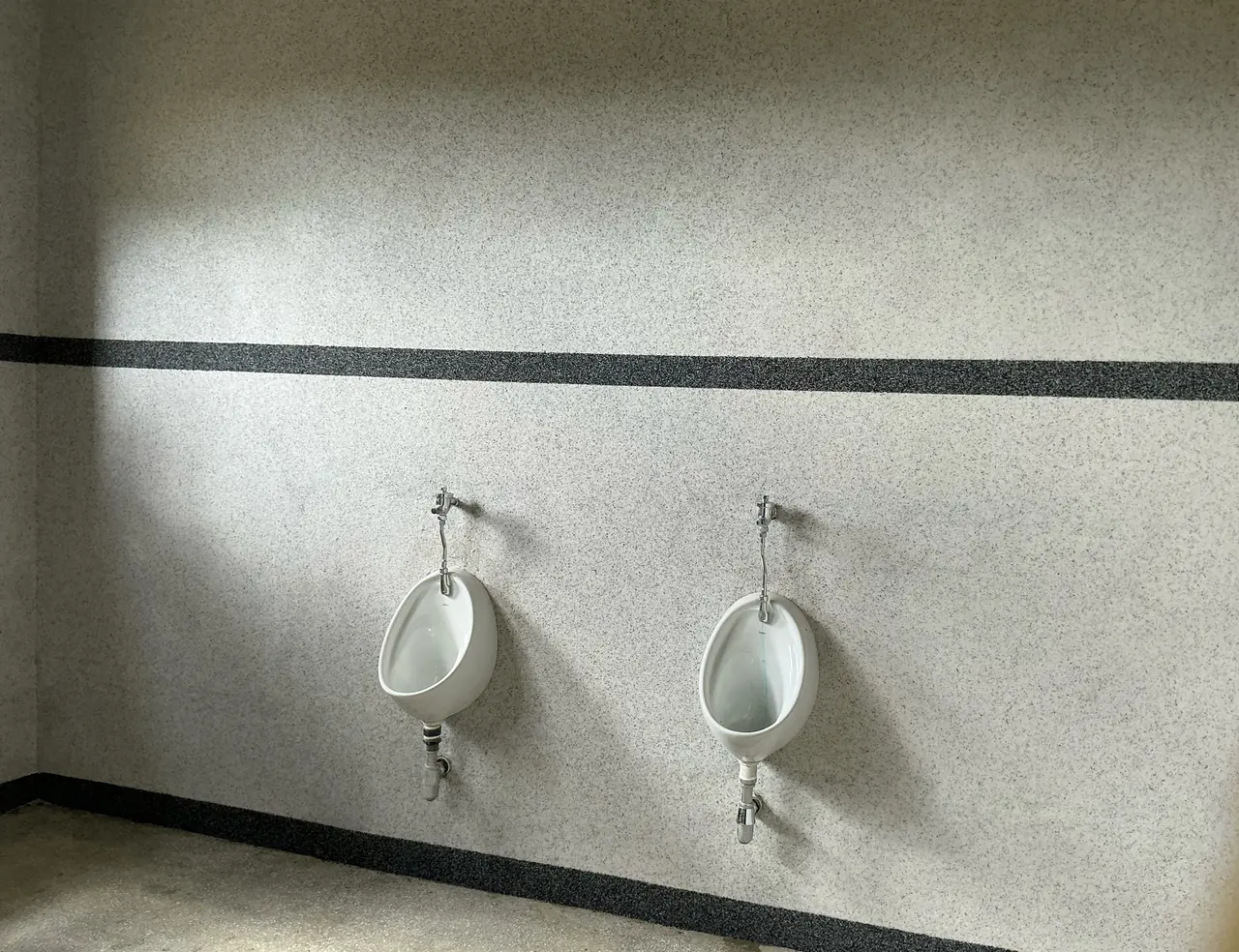
Commercial tiling and wall finishes Harare — durable hard-wearing surfaces in a commercial washroom in Zimbabwe

Commercial tiling

Offices, retail, schools, clinics and hospitality, where the finish has to survive constant traffic and cleaning.

  • Commercial washrooms and changing facilities
  • Reception areas, lobbies and corridors
  • Retail floors and shopfront entrances
  • Commercial kitchens with epoxy grout
  • Anti-slip tiling to wet and external circulation
  • Phased works around trading hours

Materials & systems

Tiles, adhesives and grouts we specify

The tile is your choice. The adhesive, grout and membrane behind it are ours, and they are chosen for the substrate, the format and the exposure — not for what is cheapest on the day.

MaterialWhere and why we use it
Ceramic tileInterior walls and light-traffic floors. Economical, easy to cut, wide range of finishes.
Porcelain tileFloors, wet areas and external use. Dense, low water absorption, hard-wearing and stain resistant.
Rectified large formatOpen-plan floors and feature walls where minimal joint width is wanted. Requires a very flat substrate.
Natural stoneGranite, marble, slate and travertine for entrances and feature areas. Sealed before and after grouting.
MosaicShower floors, niches and detail bands, where small units follow falls and curves better than large tiles.
Standard cement adhesiveInterior walls and floors on sound, stable cementitious substrates.
Flexible / modified adhesiveLarge formats, external areas, over screeds and anywhere movement or temperature swing is expected.
Liquid tanking membraneShowers, bathroom floors, balconies and any wet area, reinforced at corners and penetrations.
Cementitious groutGeneral walls and floors. Available in a wide colour range and easy to maintain.
Epoxy groutCommercial kitchens, laboratories and heavy-cleaning areas needing chemical and stain resistance.
Silicone and trimsMovement junctions, internal corners and exposed tile edges, finished neatly rather than left raw.

Benefits

Why it is worth paying for proper tiling

  • Decades, not years — a correctly bedded and grouted tiled floor outlasts almost every other floor finish available.
  • Water stays where it belongs — proper tanking protects the structure below, which is where a leak becomes genuinely expensive.
  • Easy to live with — sealed, hygienic surfaces that clean quickly and do not hold odours or stains.
  • Suits the climate — tiled floors stay cool through the Harare summer and are unaffected by strong sun through large windows.
  • Adds resale value — bathrooms and kitchens sell houses, and tiling is the single most visible element in both.
  • No lipping, no hollow tiles — level, fully bedded tiling that feels solid underfoot and looks right along a sightline.

Project gallery

Tiling and surface work

More completed work in our project portfolio.

Recent related projects

Tiling delivered recently

Completed

Bathroom Strip-Out & Retile

Residential · Kamfinsa, Harare

Full strip-out back to substrate, floor re-screeded to falls, wet area tanked and tested, then tiled and grouted. Handed over sealed and snag-free.

Completed

Kitchen Floor & Splashback

Residential · Harare

Large-format floor tiling set out from the island sightline, with a continuous marble-effect splashback carried behind the hob and around the return.

Completed

Commercial Washroom Refit

Commercial · Harare

Hard-wearing wall and floor finishes specified for constant traffic and daily cleaning, installed with the building remaining open to the public.

Questions answered

Tiling FAQs

Practical answers from our team in Harare. Still unsure? Ask us directly.

How do you decide where to start setting out?

We set out from the most visible line in the room, not from the nearest wall. That is usually the doorway sightline, a long unbroken wall, or the centre of a feature such as a bath or island.

Rooms in Harare are rarely truly square. Starting from a wall guarantees a tapering cut somewhere obvious; setting out properly pushes the cuts to the least visible corners.

Can you tile over existing tiles?

Sometimes, but we rarely recommend it. It only works where the existing tiles are firmly bonded, flat, and the extra height does not foul doors, thresholds or sanitaryware.

In wet areas we almost always strip back, because you cannot verify the waterproofing under an existing finish, and a failed tank behind new tiles is an expensive discovery.

What is the difference between porcelain and ceramic?

Porcelain is fired denser and absorbs far less water, which makes it harder, more frost and stain resistant, and suitable for floors and outdoor use. Ceramic is softer and more economical, and works well on interior walls.

Porcelain is harder to cut and takes longer to lay, which is why a porcelain floor costs more than a ceramic one of the same size.

Do you waterproof showers and wet areas?

Yes, and it is not optional on our jobs. Wet areas get a liquid-applied tanking membrane over a properly prepared substrate, taken up the walls to the required height and dressed into the floor.

Corners, junctions and pipe penetrations are reinforced with tape or collars, because that is where almost every leak begins.

How long should I wait before using a newly tiled bathroom?

Allow the adhesive to cure before grouting — typically 24 hours — and then a further 24 hours after grouting before the area is used or wetted.

Rushing this is a common cause of grout discolouration and lifting tiles. We build the curing time into the programme rather than treating it as a delay.

Do you install large-format tiles?

Yes. Large-format tiles need a flatter substrate than smaller sizes, so we usually skim or re-screed first, and we use a back-buttering technique with a notched trowel to achieve full adhesive coverage.

Without full coverage a large tile will sound hollow and eventually crack under point load.

Why do you use movement joints?

Tiles and the substrate beneath them expand and contract at different rates, particularly on large floors and anywhere exposed to sun. Movement joints give that expansion somewhere to go.

Floors without them tend to tent or crack along a line after the first hot season. We include perimeter and field joints where the area requires it.

Can you match or extend existing tiling?

We will try, but be realistic: tile ranges change frequently and dye lots vary even within a range. Bring us a spare tile or let us lift one from an inconspicuous area.

Where an exact match is not available, we will suggest options such as re-tiling a defined area to a natural break line rather than leaving a visible mismatch.

Do you tile outdoor areas, patios and pool surrounds?

Yes. Outdoor tiling needs frost and UV stable porcelain, an anti-slip surface rating, a flexible external-grade adhesive and correct falls for drainage.

Interior tiles laid outside will fail, and interior adhesive outside will fail faster. We specify accordingly.

What grout do you use and what colour should I choose?

We use cementitious grout for most work and epoxy grout where chemical or stain resistance matters, such as commercial kitchens.

On colour: a grout close to the tile shade hides the grid and makes a floor look larger; a contrasting grout emphasises the pattern. Very light grout on a floor will show traffic within a year.

Do you remove and dispose of old tiles?

Yes. Strip-out, removal of old adhesive and screed, and disposal of the rubble are included in the quotation and priced as their own item so you can see the cost.

Strip-out is dusty work, so we seal off the area and manage dust rather than letting it move through the house.

Which areas of Harare do you cover for tiling?

We work throughout Harare including Greendale, Borrowdale, Highlands, Avondale, Mount Pleasant, Marlborough, Belgravia, Chisipite and Kamfinsa.

Commercial tiling extends to Msasa, Pomona, Westgate and the surrounding industrial and retail areas.

Where we work

Tiling across Harare

We work from 33 Western Road, Greendale, and cover Harare and the surrounding suburbs. Travel time matters on a project like this — being local means we can get back to site quickly if something needs attention after handover.

Outside these areas? Tell us where the property is and we will let you know honestly whether we can deliver our standard there.

  • Greendale
  • Borrowdale
  • Highlands
  • Avondale
  • Mount Pleasant
  • Marlborough
  • Belgravia
  • Chisipite
  • Newlands
  • Glen Lorne
  • Msasa
  • Pomona
  • Westgate
  • Hatfield
  • Ballantyne Park
  • Kamfinsa

Related services

Often specified together

Most projects need more than one trade. We run them under a single contract so the sequencing is our problem, not yours — see all services or browse our completed projects.

Request a Tiling quote

Tell us the property, the suburb and roughly what needs doing. We will visit, measure properly and send an itemised quotation — no obligation.

Request a Quote WhatsApp Us